

Gary Evans and Alex Hartter at Extreme Shot Italia V, Global Edition
Meet the ESI 2025 light gun kings!

We’re going to show you what it takes to win the world largest International ELR global gathering and these two shooters from Casper Wyoming showed us how it’s done with the legendary and dependable 300 Norma Magnum, by now a super well known ELR light class cartridge. We have covered this 300Norma Mag numerous times here at Rifletalks.com over the last years.
You can View all ESI 2025 MEDIA here
Gary also ran this 300Norma Mag in heavy class match at ESI out to 2600meters and even got a hit on the 2600m target with it! Legends.

WATCH them below and enjoy this shooting and then we’ll go on to the interview with them which we held a few weeks after the match while the dust had settled and everyone was back home.
Gary’s first day run at ESI worked out like this from 500- 1340m
They started with a strong run, they missed cold bore and first shot on 680 but quickly worked their way into the target zone with plenty of ones.
Just in case you’re wondering the target at:
680m had an average of 40% hit rate with 33% first round hit. Gary scored 66% hit rate.
The 810m target had an average hit rate of 48% , Gary scored 100% here.
The 1200m POISEWEALTH Target, that also had a cash payout of €250 per shooter associated with it for 4 shooters that made an impact on first round was probably the most challenging target at 40x40cm and that had an average hit rate of 25% with 16% on first round. Gary scored 66% here
The last target for light class day 1 at just past 1300m had a 37% hit rate with 35% hit rate on first round. Gary had 66% hit rate here.

Day 2 1400- 1640m
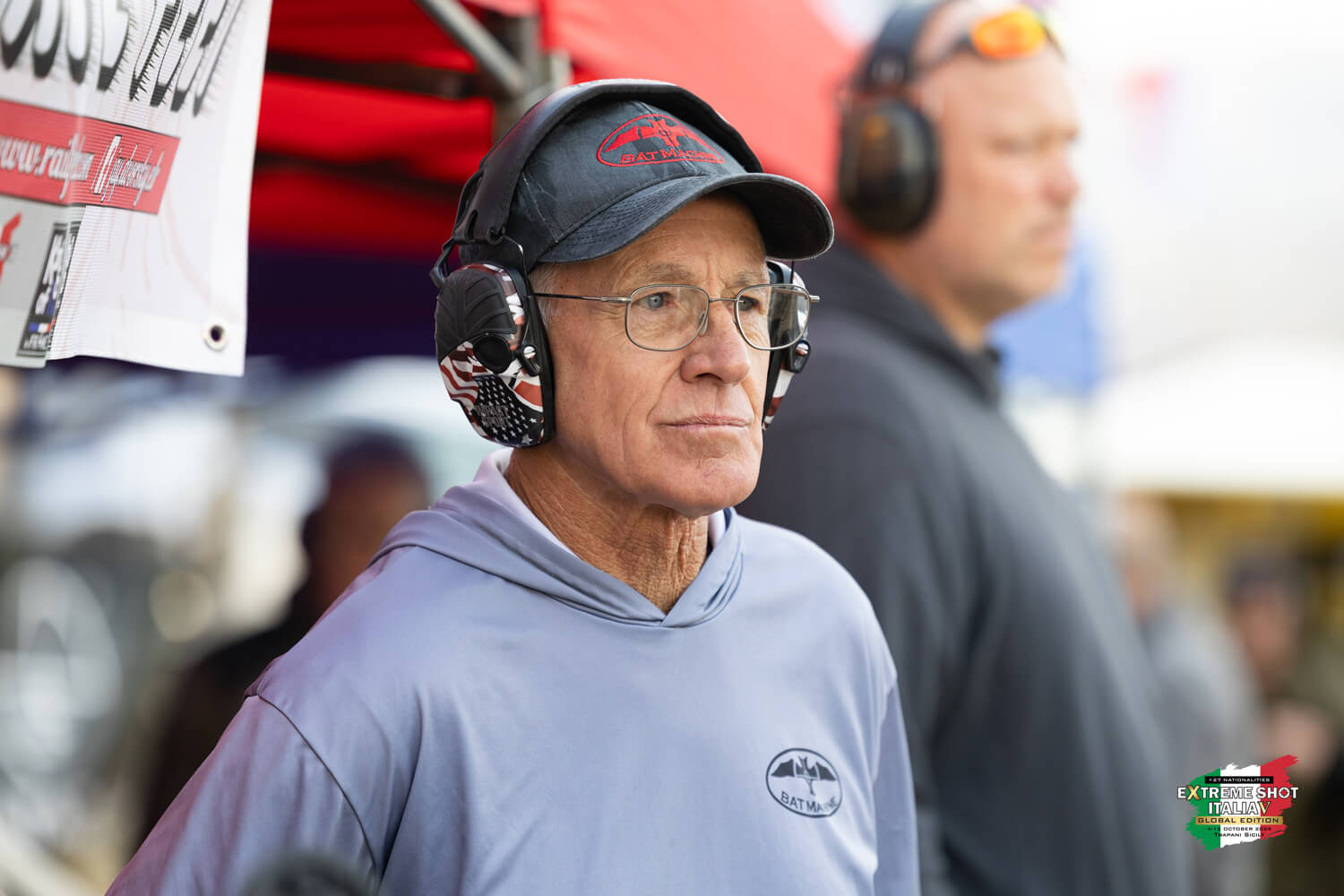
Strong performance here from Gary and Alex Hartter.
On this day, the 1400m target had an average hit rate across all 5 shots of 28% across all participants.
The 1500m had 33% hit rate across 5 shots. 22% was the first round average hit rate.
The 1 mile target had 27% hit rate. 24% of shooters had a 1 mile hit including Gary Evans and Alex Hartter team.

DAY 3 FINALS in light class
On Day 3, Gary had a great run, a home run. We warmed up on the 1860m target with a 1 round hit, 33% hit rate. The average hit rate on this target was 24% and 42% on the 3rd shot. That’s also when Gary impacted the plate.
On the finals Target, Gary did what Tony Zammit did in 2024 with a 4/5 hit run that simply blew our socks off! The average hit rate was 27% at 2000meters. Gary had a staggering 80% hit rate. That shows that across this course of fire at ESI light class this team of Gary and Alex were always above the average hit rate and cementing themselves at the top! Congrats guys you’re a great shooting team and fantastic people to be around with as we experienced over these days at ESI.

In the next part of this article, I shall be bringing you the interview to learn more about how these guys prepare for ELR matches and how they manage to get this amazing performance. Stay tuned to rifletalks.com
300 Norma Mag out to 2600m in competition at ESI
NEXT WATCH GARY AND ALEX IN HEAVY CLASS OUT TO 2600m USING THE 300NORMA MAG
Summary
Rod Formosa welcomed Alex Hartter and Gary, who shared their extensive experience with ELR shooting, including their participation and notable performance at Extreme Shot Italia, where Alex Hartter hit the 2,000m target four out of five times using the 300 Norma Mag in the light class.
Alex Hartter detailed their custom reloading process, including the preference for the 300 Norma Improved chamber, ADG and Peterson brass, N570 powder aiming for 2985 fps, and the importance of consistent velocity, while also discussing testing procedures, the synergy with spotter Gary, and the challenge of wind reading via mirage.
The participants also discussed optics (Nightforce ATACR 7-35 and BTX spotting scope), the shift from MOA to Mil units for ELR, and the growing popularity of ELR shooting in Wyoming.
Details
- Introduction to ELR Shooting Background Rod Formosa welcomed Alex Hartter and Gary, who joined from Casper, Wyoming, and discussed their experience at Extreme Shot Italia. Alex Hartter shared that they began shooting F-class about 15 years ago, briefly switched to short-range bench rest due to injury, and then started with ELR field matches before moving into “true ELR light heavy gun” two years ago. Rod Formosa noted their own similar start in F-class before getting “hooked” on the reactive side of ELR, putting lead on steel.
- Caliber Choice and Performance Rod Formosa noted that Alex Hartter and Gary shoot the 300 Norma Mag, performing well by hitting the 2,000m plate four out of five times and achieving one hit out of five at 2,600m in the heavy class with the same caliber. Alex Hartter explained that they were introduced to the 300 Norma Improved through Danny Gilbert at ELR field matches and found it to be an “easy shooting gun”. Alex Hartter prefers to keep their loads under 3000 feet per second (fps) where the rifle seems to shoot best.
- Cartridge Improvement and Customization Rod Formosa asked Alex Hartter about choosing the Norma Improved chamber over the standard format and the advantages, which might involve gaining four to six grains of powder. Alex Hartter stated that they were a “wildcatter” and liked the aesthetics of the 35-degree shoulder of the Improved version, which is very efficient, as opposed to a 20-degree shoulder. They also shared that they like to do the work involved, such as turning necks.
Barrel Round count for Big Matches
- Components and Consistency in Reloading Alex Hartter shared details about their reloading components for the Norma Improved, including running ADG and Peterson brass, using 215M primers, and Vihtavuori N570 powder, despite concerns that it may reduce barrel life. Alex Hartter maintained that N570 shoots well and is very consistent, aiming for a muzzle velocity of 2985 fps, which results in a barrel life of between 600 and 700 rounds. They also stated that they anneal the brass after every firing using an AMP annealer, which they believe helps consistency.
What neck tension are they after?
- Neck Tension and Bullet Preparation Alex Hartter explained that they generally aim for about 0.002 inches of neck tension and check this using precision size mandrels. Although the Norma Improved chamber does not require turning the neck, Alex Hartter turns them to skim and ensure they are uniform and concentric. Alex Hartter mentioned running 245 Berger bullets and pulling them straight out of the box, noting that they do not point the long-range hybrids, but they have pointed EOLS bullets before as it helps.
How do these Light Class kings load?
- Load Development and Velocity Consistency Alex Hartter shared that their goal for Extreme Spread (ES) in velocity is ideally in the two to three fps range, or realistically three to five fps. They aim for four fps for the majority of shots but noted fluctuations where some batches yield five to six SD, and others yield three. Alex Hartter stated that they rely on past experience and small adjustments to powder charge when using new barrels for a known cartridge rather than full-blown ladder tests, making 0.3-grain increments when needed.

Testing Ammo
- Testing Procedure and Distances Alex Hartter described their testing process, starting with shooting at 100 yards, then 500 yards, and pushing out to 1,000 yards if the load is performing well. They typically seek a half-minute group size at 100 yards and then aim to maintain a similar performance at 500 yards. For short distances (up to 1,000 yards), five-round groups provide the necessary information, but for longer distances (1,500 to 2,000 yards), they shoot 10 to 15-round strings to gain more knowledge.
- Team Synergy and Practice Techniques Alex Hartter highlighted the importance of synergy and communication between the shooter and spotter, mentioning that they and Gary are very much alike and understand each other well. Alex Hartter noted that sometimes the spotter runs the show, and other times the shooter guides, depending on the environment. Practicing solo matches has also helped Alex Hartter learn to spot for themself, providing two sets of eyes to communicate and make informed decisions, even if that means running with a call they might not agree with.
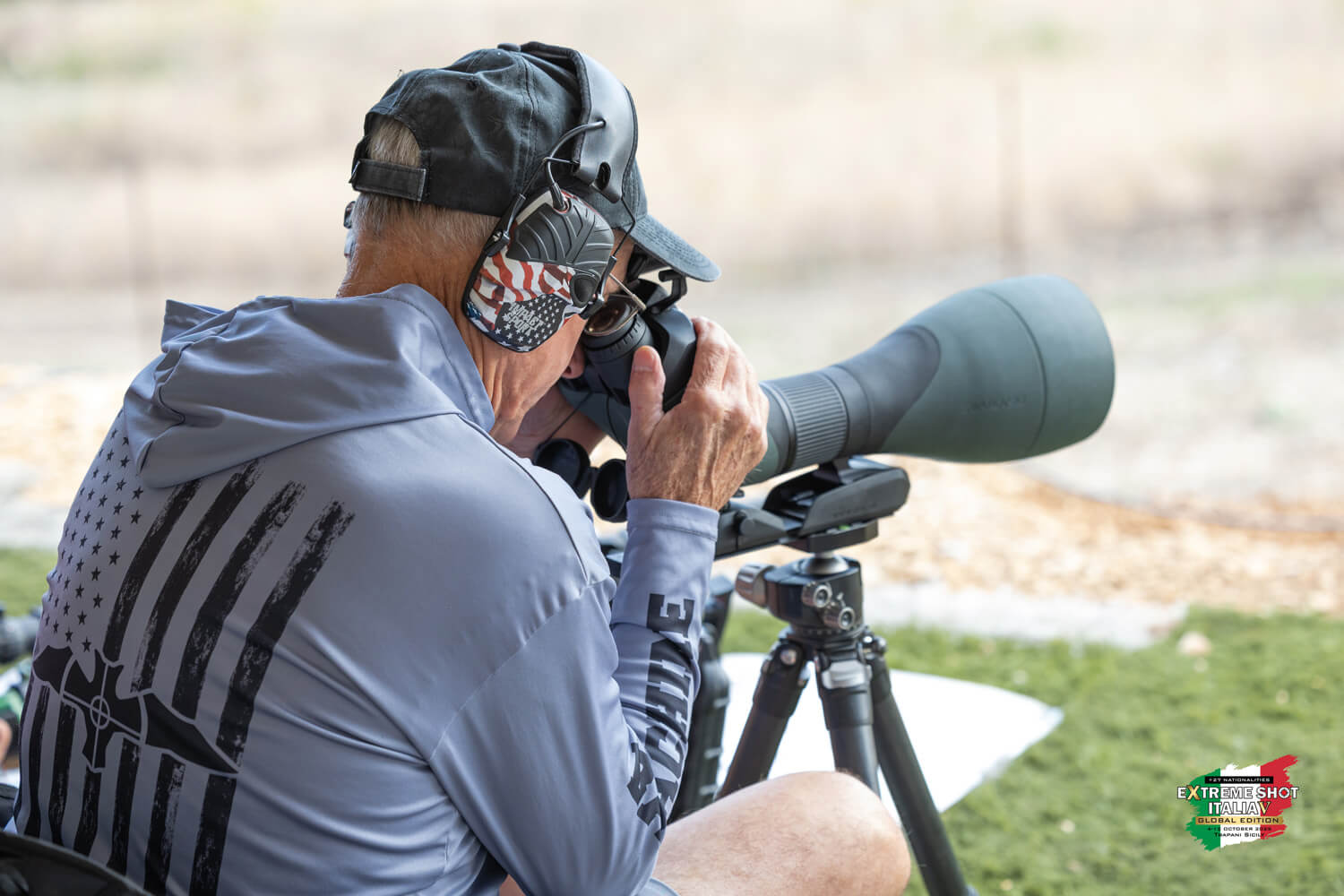
- Optics Selection Alex Hartter specified that they use Nightforce ATACR 7-35 rifle scopes. For spotting, Alex Hartter uses the BTX spotting scope with a reticle, which significantly aids their spotting. Alex Hartter prefers the BTX for the dual eyepiece and bigger field of view, which eliminates eye strain over long periods compared to single eyepieces. They noted that using the extender on the BTX changes the reticle’s subtensions, converting a 0.2 mil subtension to a 0.7 mil subtension, which changes the magnification from 35x to about 58x (or 60x per the book).
- Rifle Scope Units Rod Formosa and Alex Hartter discussed their preference for rifle scope units, with Rod Formosa remaining on MOA due to long-standing F-class practice, while Alex Hartter switched to Mil for ELR shooting. Rod Formosa noted that the BTX reticle is currently only available in the mil version, which is a drawback for them.

Extreme Shot Italia Finals
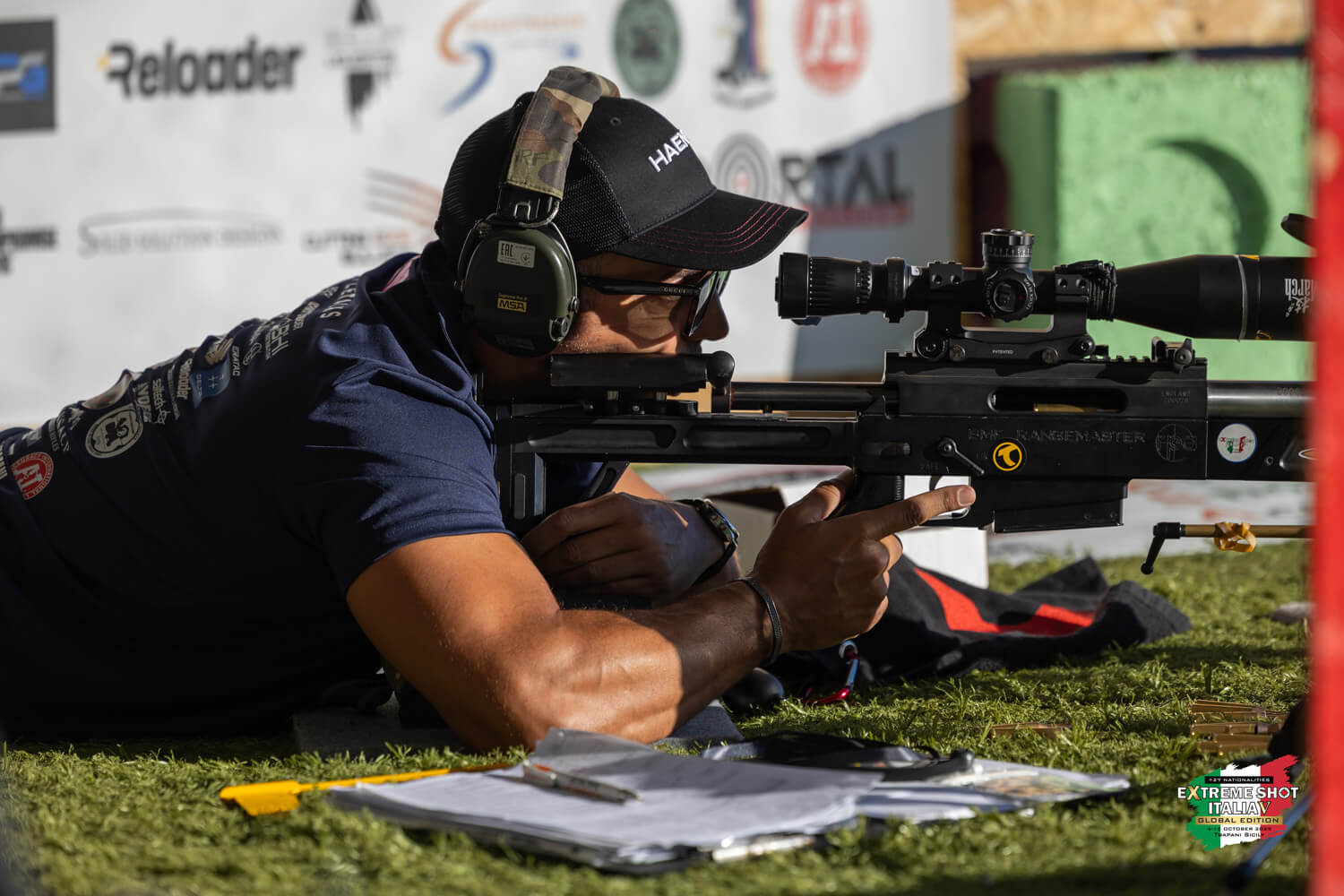
Rod Formosa seen below also ran the 300Norma Mag on a RPA Range Master Rifle.
- Extreme Shot Italia Experience Alex Hartter learned about the Extreme Shot Italia match from others who had competed the previous year. They remarked that the targets at the match were “some small targets,” noting that they normally shoot 1.5-minute targets in the US, but acknowledged that such small targets are fitting for a world tournament. Alex Hartter found the match format to be similar to other ELR matches, with six to seven targets, but noted the three and then five rounds format was unique. Rod Formosa mentioned planning to make changes for next year to add an interesting twist to the format, including incentivizing participation in both light and heavy classes.
- Light Gun Performance and Inspiration Rod Formosa highly praised Alex Hartter’s performance in both light and heavy classes using the light gun, especially the four out of five hits at 2,000m and the impact at 2,600m. Rod Formosa stated that this performance provided inspiration and a benchmark for many shooters watching who run similar calibers.
- Wind Reading Challenges Alex Hartter described the biggest challenge at the match as judging the wind based on mirage, which they stated “can’t always trust” and sometimes lies. When mirage is unreliable, Alex Hartter explained that they “stairstep” their way out with the targets, using half corrections from a miss to the center of the plate, and relying on experience to gauge the next move. The light 245-grain bullet compared to heavier calibers also posed potential serious elevation issues when dealing with certain winds.
- Velocity Monitoring for Long Range Alex Hartter strongly believes that running a chronograph for long shots (2,000 meters and plus) is important because a 10 fps difference in bullet speed can significantly impact performance at 2,600 meters. Monitoring velocity helps them quickly account for slower rounds, enabling the shooter to make minor adjustments to favor a touch high, knowing that the next round is likely to return to the original point of impact.
- Preference for Fired Brass Alex Hartter stated that they prefer using third, fourth, or fifth-fired brass over virgin brass, even though they have seen F-class shooters win using virgin brass. Because Alex Hartter runs an improved cartridge, they must fire-form their brass, often by building a false shoulder, which makes virgin brass unideal for competition use. Alex Hartter noted that high-quality brass like Lapua, ADG, and Peterson can yield up to 10 firings.
- Future Match Participation and ELR Popularity Alex Hartter expressed a desire to bring both their light and heavy guns to future international matches, as they enjoy having both, even though it’s a hassle to transport. In Wyoming, ELR is growing, with two field matches, and a dedicated ELR range is being developed, although currently, they must drive seven to 10 hours one way to compete in nearby states. Alex Hartter mentioned that the largest match they have attended was King of One Mile, which had about 130 shooters.
- Conclusion and Future Plans Rod Formosa expressed gratitude for Alex Hartter and Gary sharing their knowledge and experience, emphasizing the inspirational nature of their shooting performance at Extreme Shot Italia. Rod Formosa mentioned plans to improve the match for the following year based on feedback and to consolidate ideas, aiming to attract more shooters from the US, noting the significant increase in US participation already seen from last year.
