Meet the Steiner M7Xi IFS 4-28×56 Scope – Intelligent Firing Solution, it’s a game changer for both match shooters, military and hunters. Let’s find out more about it. You can go to specific sections of this article from the index.
STEINER M7Xi IFS 4-28×56 rifle scope– something you should visit and try. Join me on this journey to southern Germany where we met the people behind its development.Rifletalks.com is committed to bring you the journey behind some of the industries best manufacturers in way which helps you understand what goes on behind the R&D of these unique products.
I’m not new to the German industry, i’ve worked on the cybersecurity side of it for a few years and Germany has recently ramped up its GDP spend on defense which will see a heightened investment across all defense suppliers. Germany has a strong work culture and expertise in the defense industry and meeting the people behind it is a glimpse into this special sector. Quick overview on the naming convention from Steiner- the logic behing M7Xi IFS 4-28×56 is the following: M means its the military line, 7x is the zoom factor, ‘I’ stands for Illuminated, followed by the magnification.
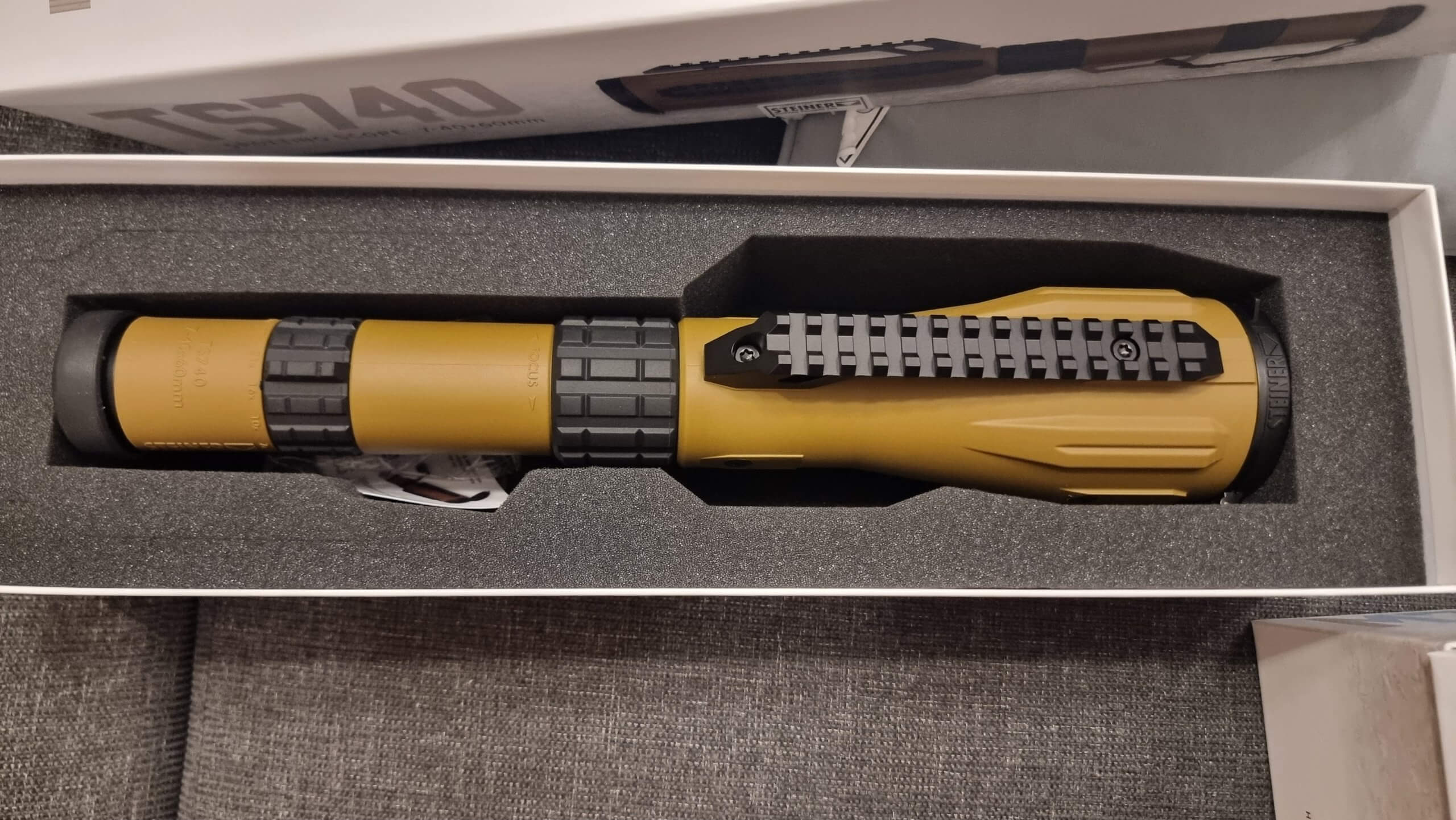
Every now and again the Optics industry manages to come forward with innovative features in optics that make our shooting experience really different. The Steiner M7Xi IFS 4-28×56 intelligent firing solution is one such system. This scope came with the Steiner field Spotting scopeTS740 7-40x60mm which comes with the same tremor 3 reticle. This pair together make a great combination, they are field useable, practical and compact enough to carry everywhere with you. Whether you are hunting Ibex in the mountains or on the range, this package will see you through with the reliability you would expect from Made in Germany.
Other reticles like MSR are available. The factory handed me this pair that was just off the shelves for our ongoing testing and review for sporting and match use.
I shall be reviewing the Steiner Field spotter TS740 7-40x60mm seperately but while I am it, I will include some images I made while hopping to my favourite places to assess the quality and easy of carry.
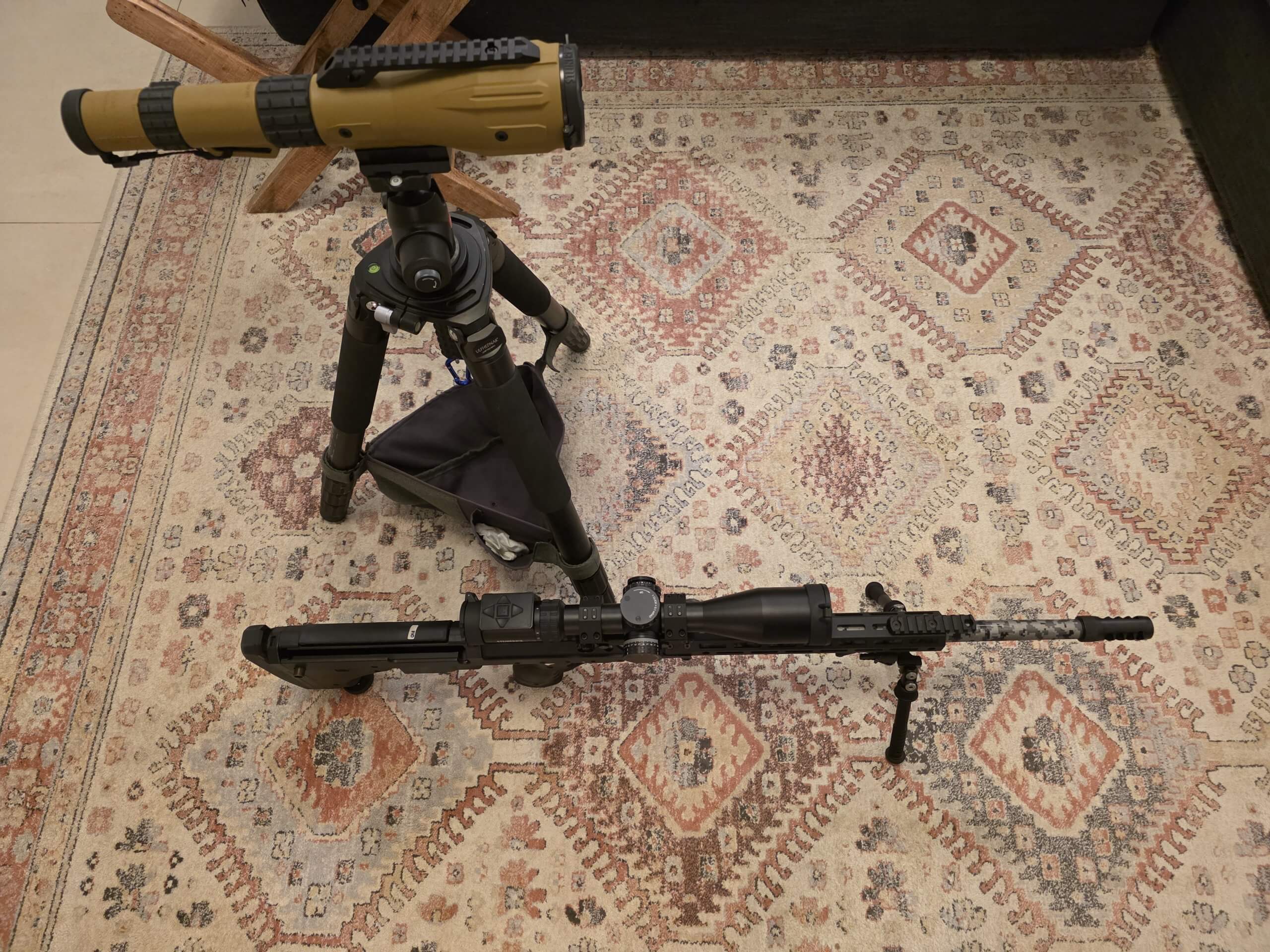
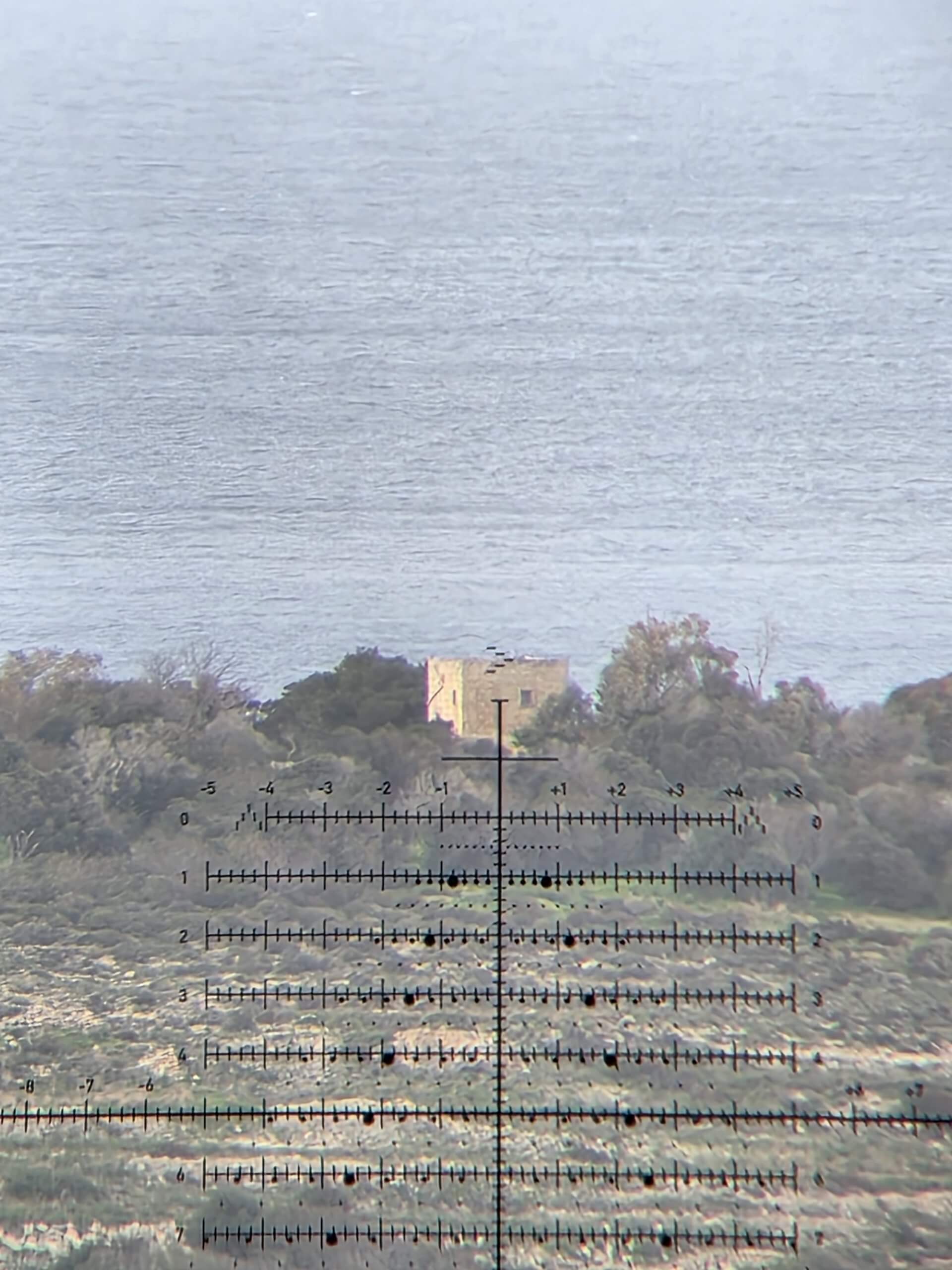
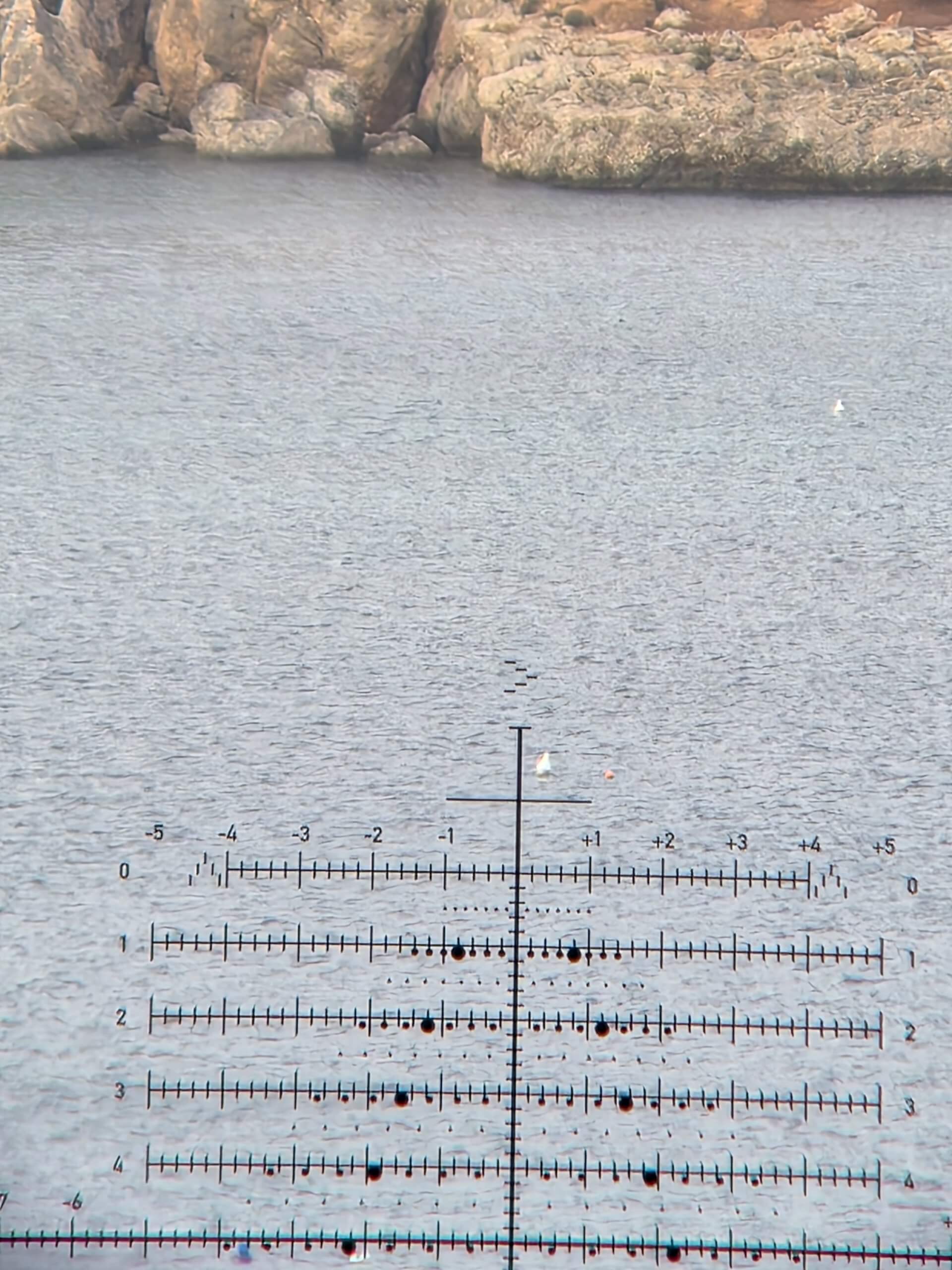
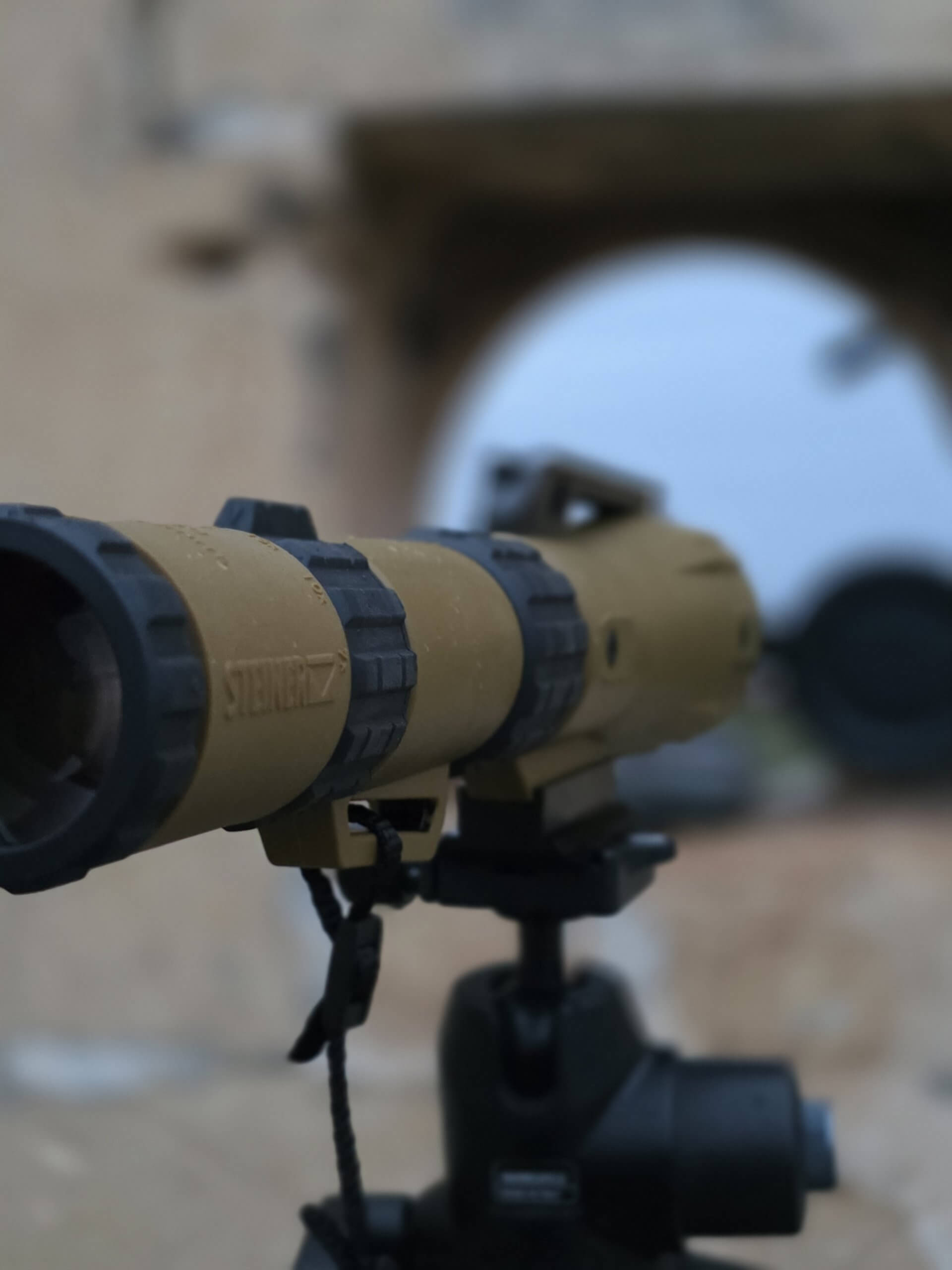
Here you can see the duo of Steiner spotting scope to which you can mount 3 seperate picatiny rails for your laser range finder, your Red dot sight for quick target acquistion, and your night vision rail. The 7-40 power means you have a huge field of view and is adaptable to many conditions. My other spotting scope setups are so much more cumbersome than this so I love the portability of it. I don’t expect it to provide the same ease of viewing ELR targets as the BTX or the kowa highlanders which we have reviewed earlier, but it does an awesome job and i’m sharing some pics i managed to take with my android phone.
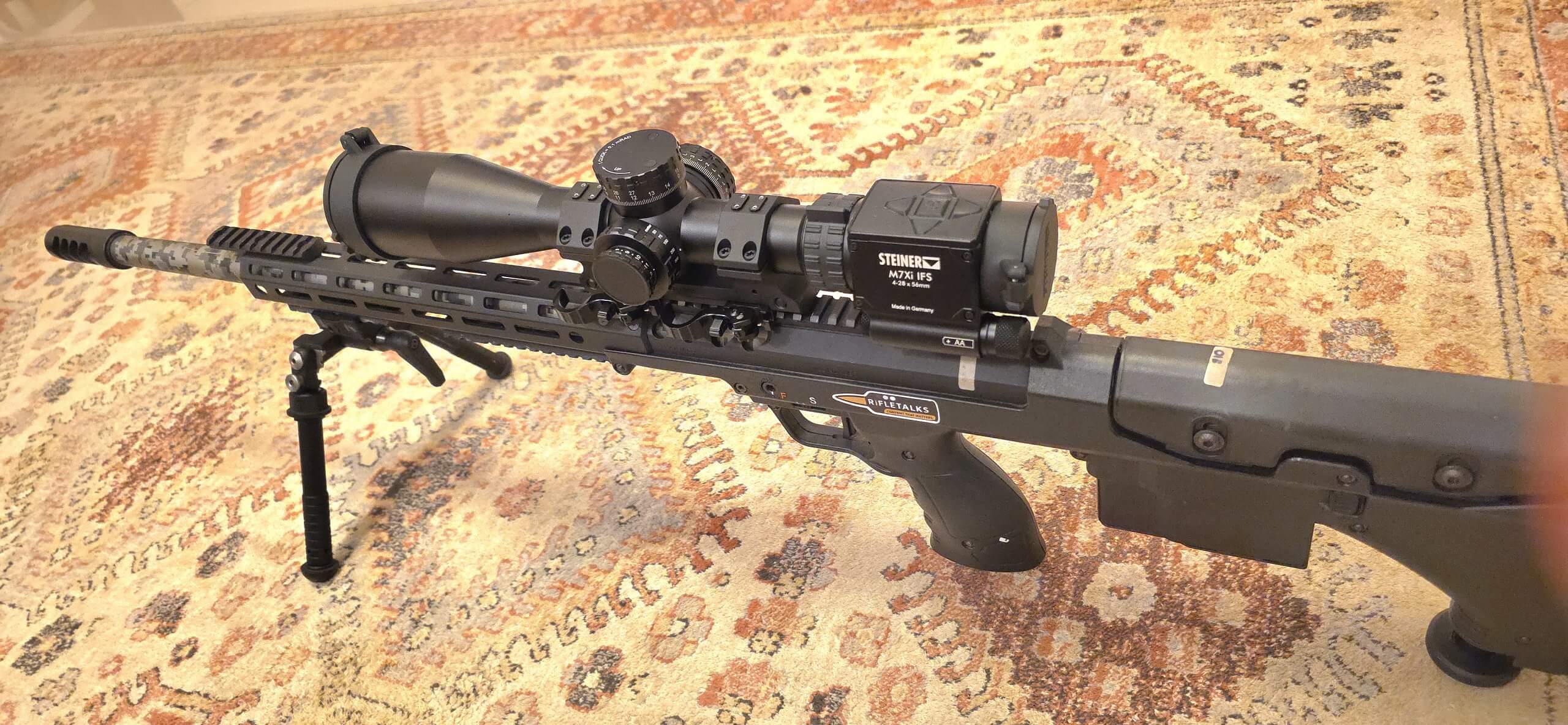
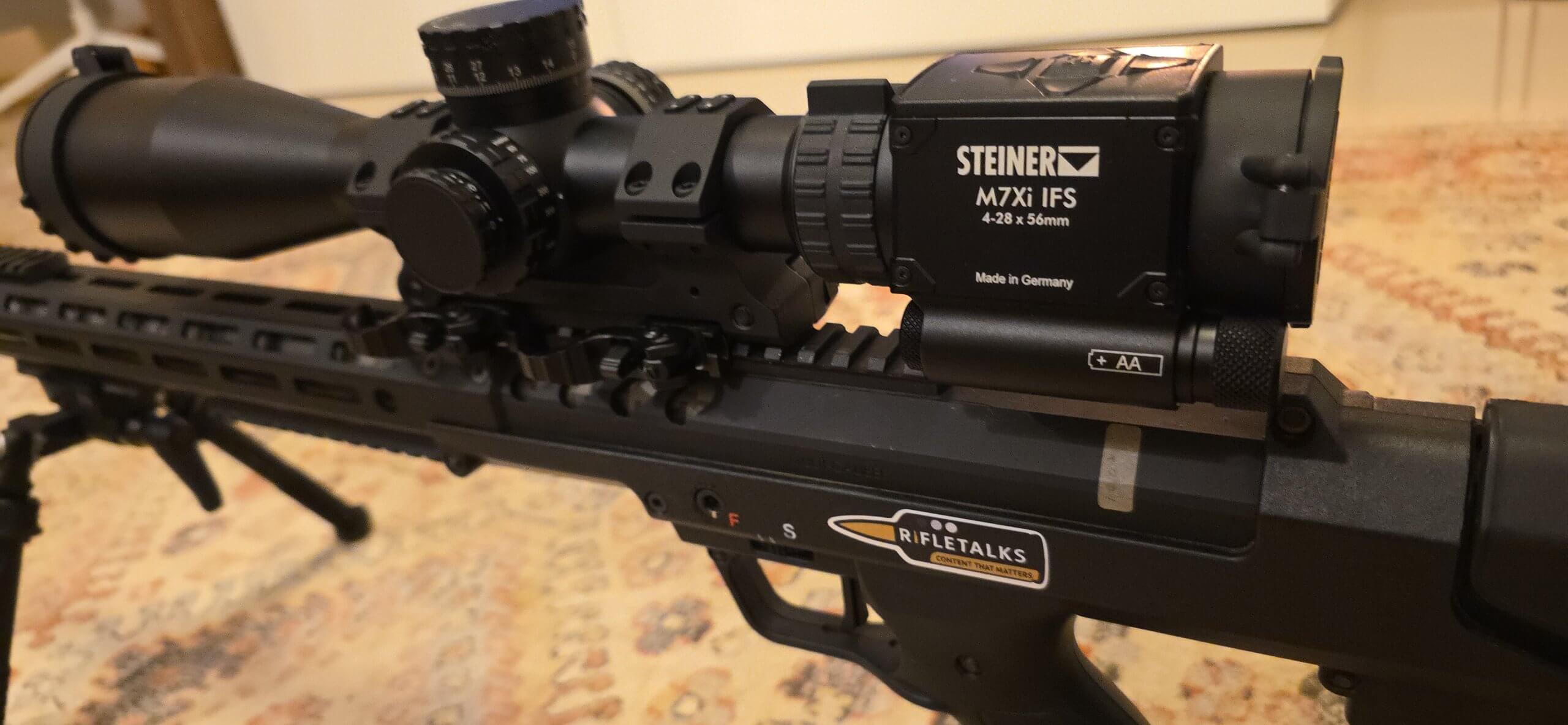
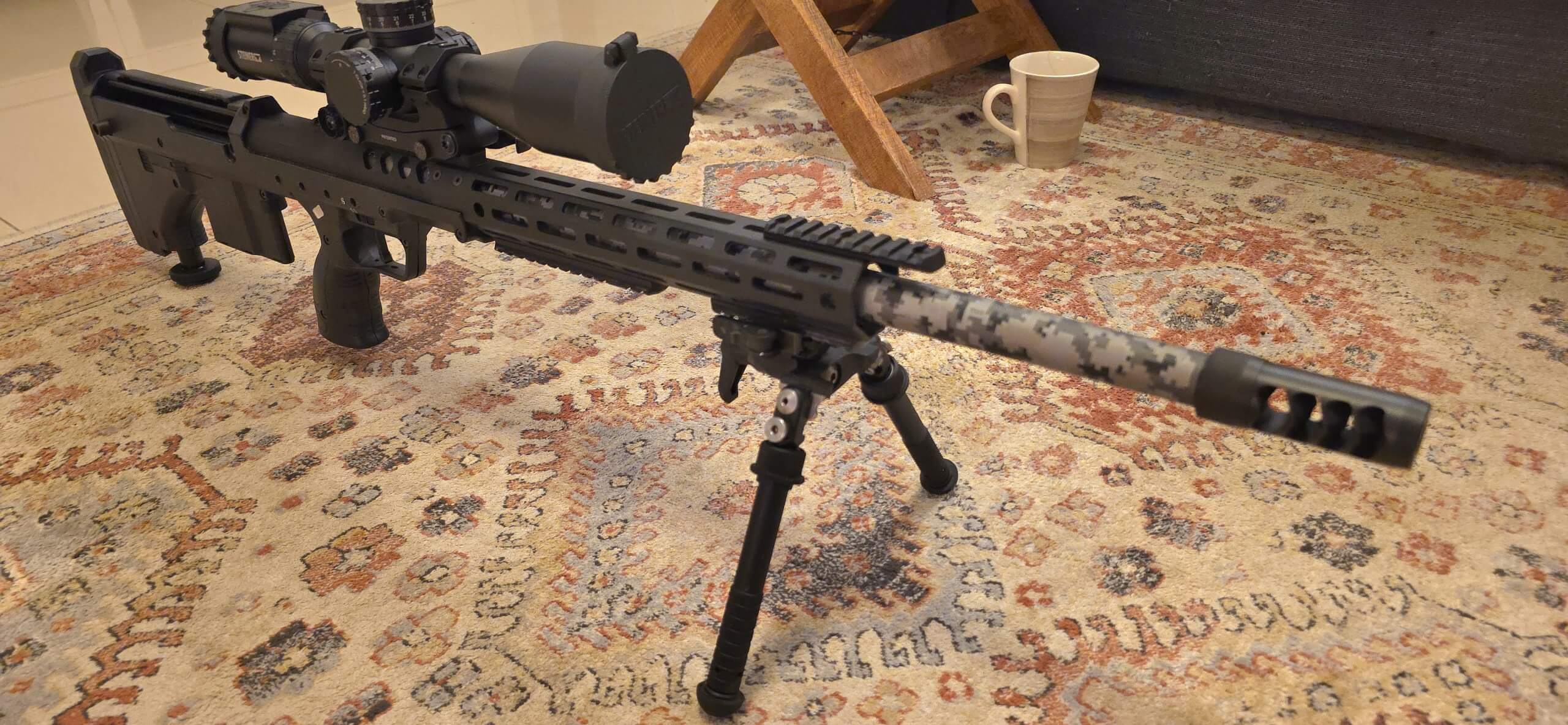
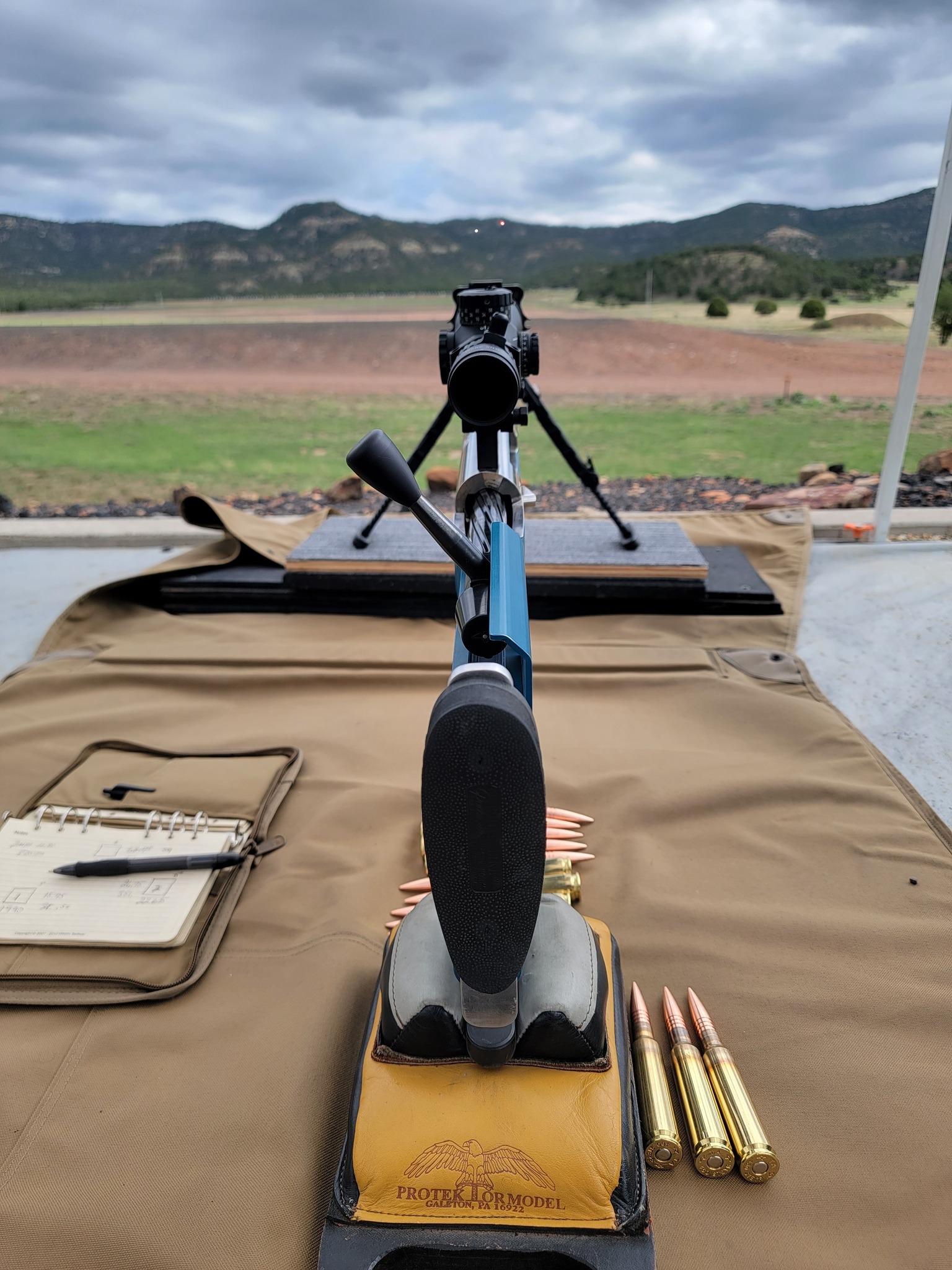
Rifle seen below is my Desert Tech SRS A2 with ERATAC Adjustable mount and the Steiner M7Xi IFS 4-28×56 using the 28″ 1.8 twist 6.5creedmoor barrel, a real tack driver.
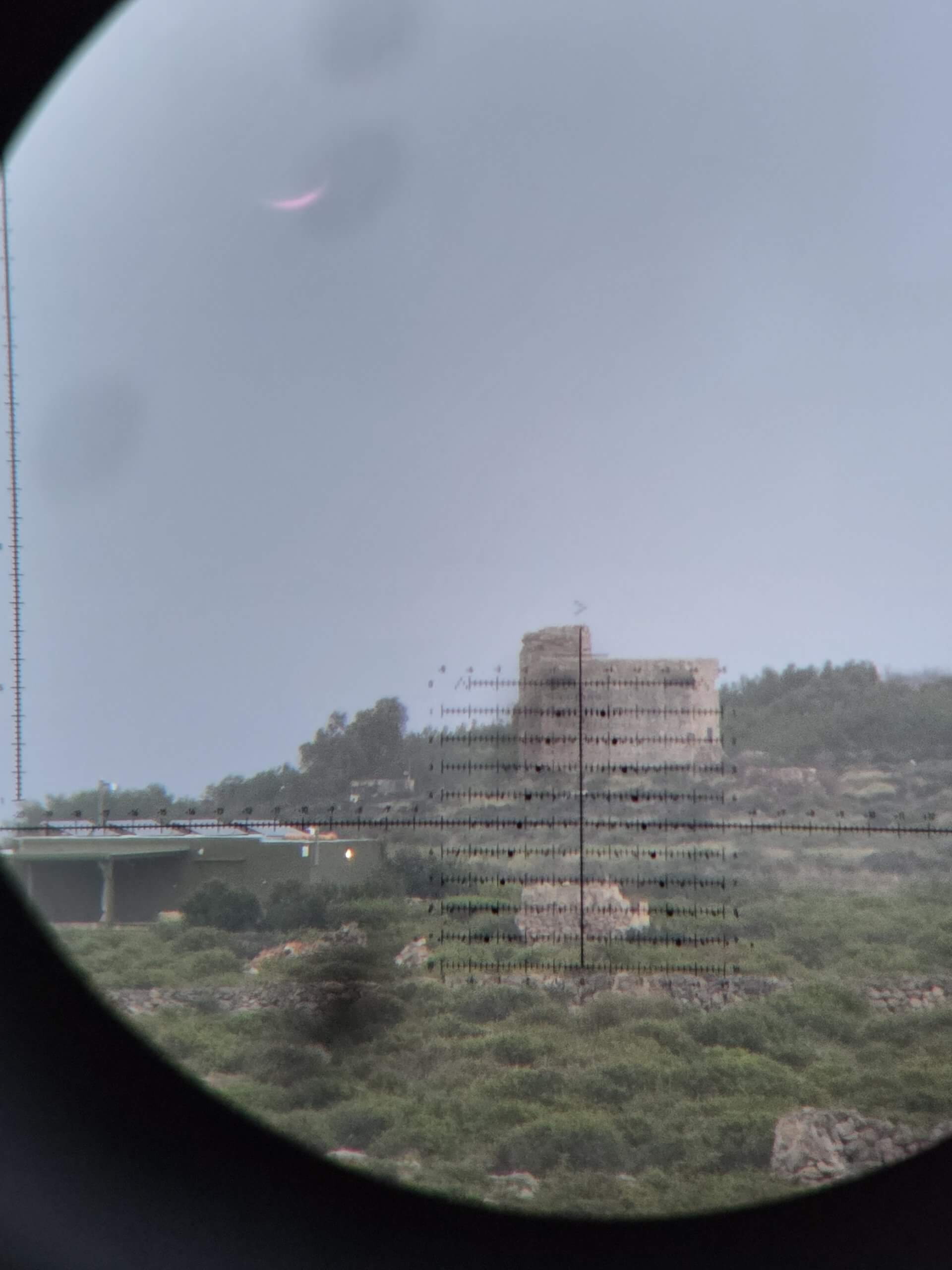
Steiner field Spotting scope TS740 7-40x60mm at 1900meters on two buoys across the bay. Those buoys tipically measure around 25-40cm
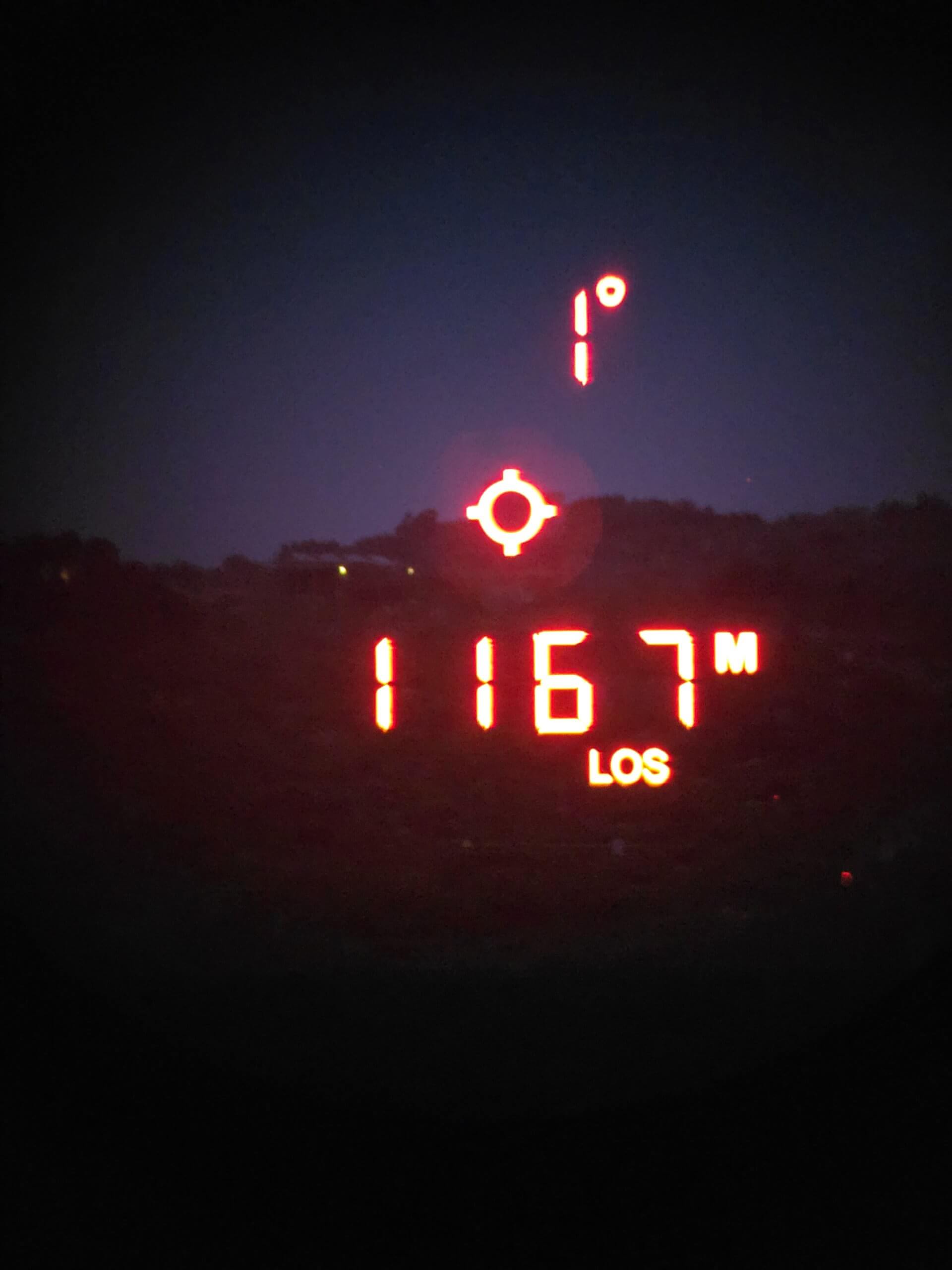
Now onto a tower at 1167M in low light conditions to give you a feel of what the optics are like in a cloudy evening before sunset. I took the picture with the range finder later when it was getting dark.
Steiner field Spotting scope TS740 7-40x60mm doing its thing at 1167m.New TS740 SPOTTING SCOPE from Steiner peeping from behing an opening in the wall. Tripod is an Ulfhednar heavy duty tripod that can easily take on the 416Barrett rifle on top of it.
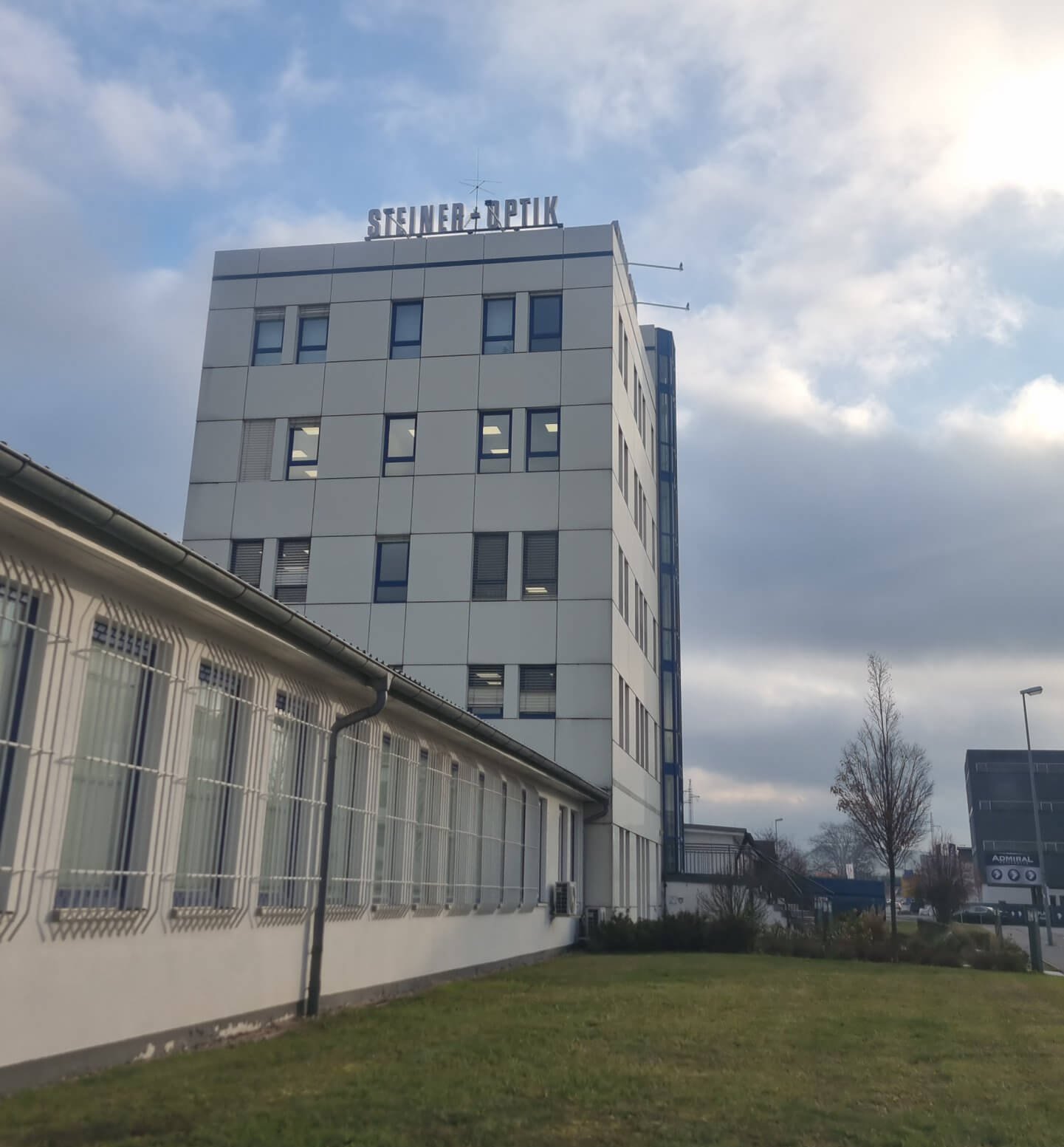
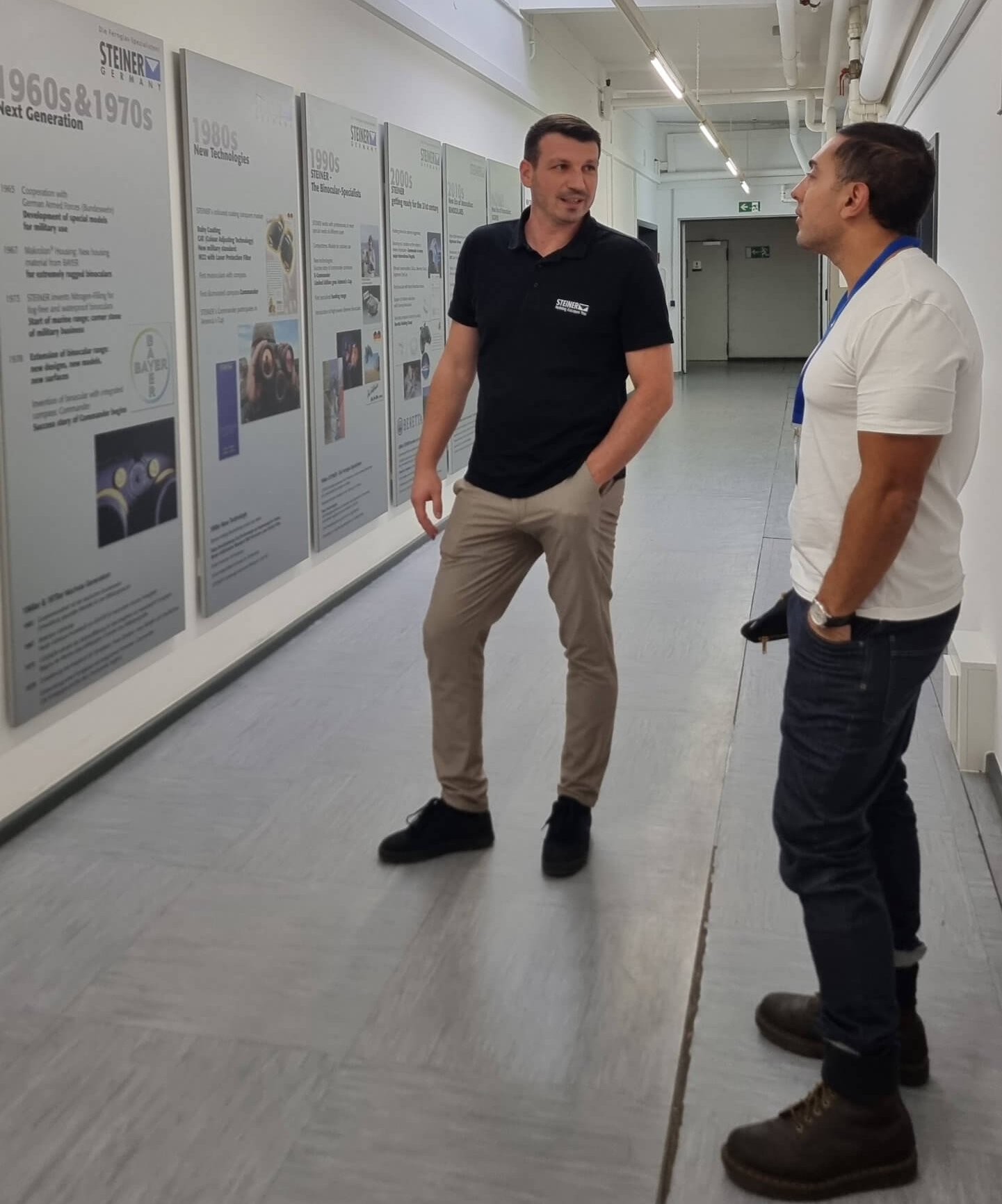
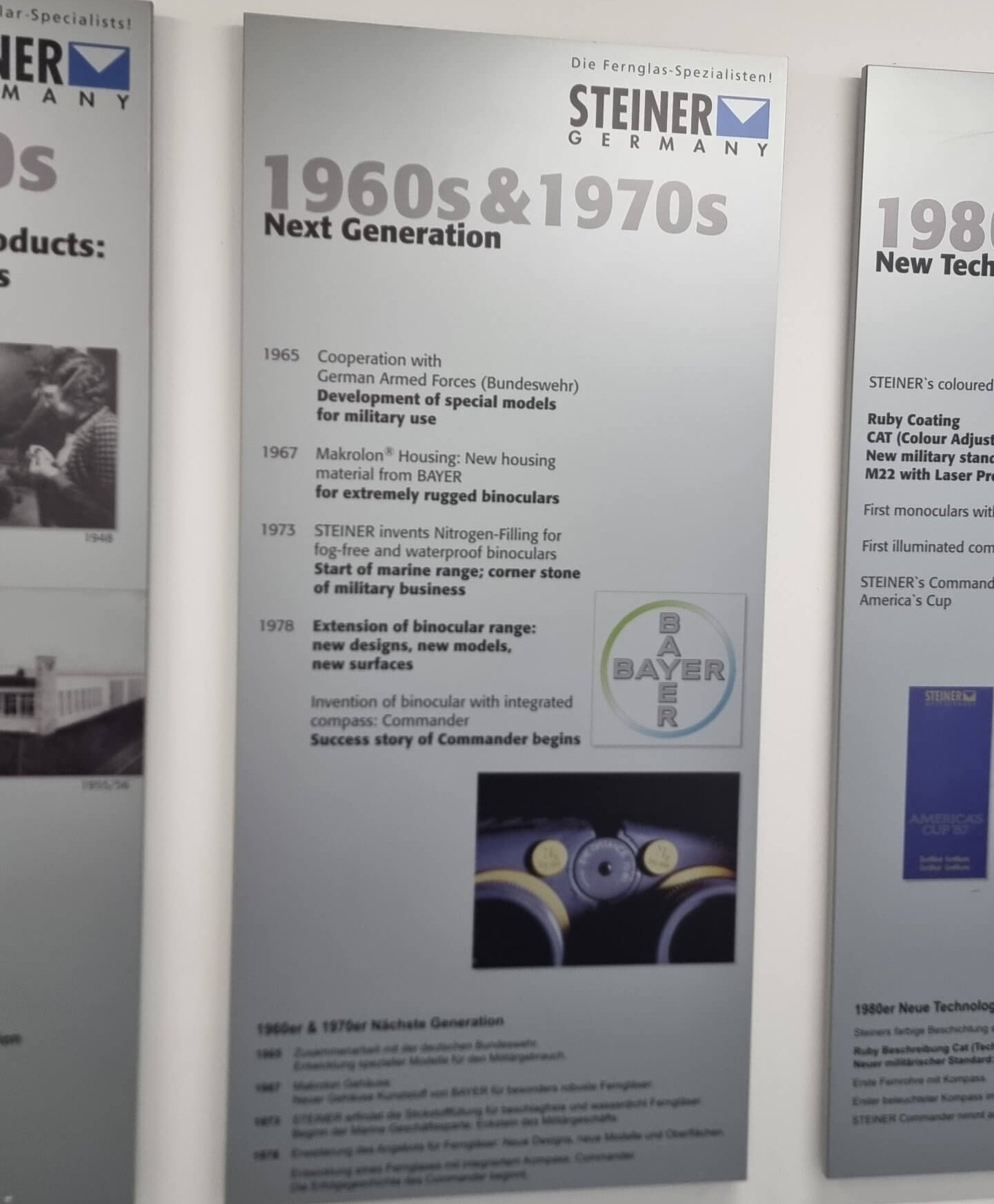
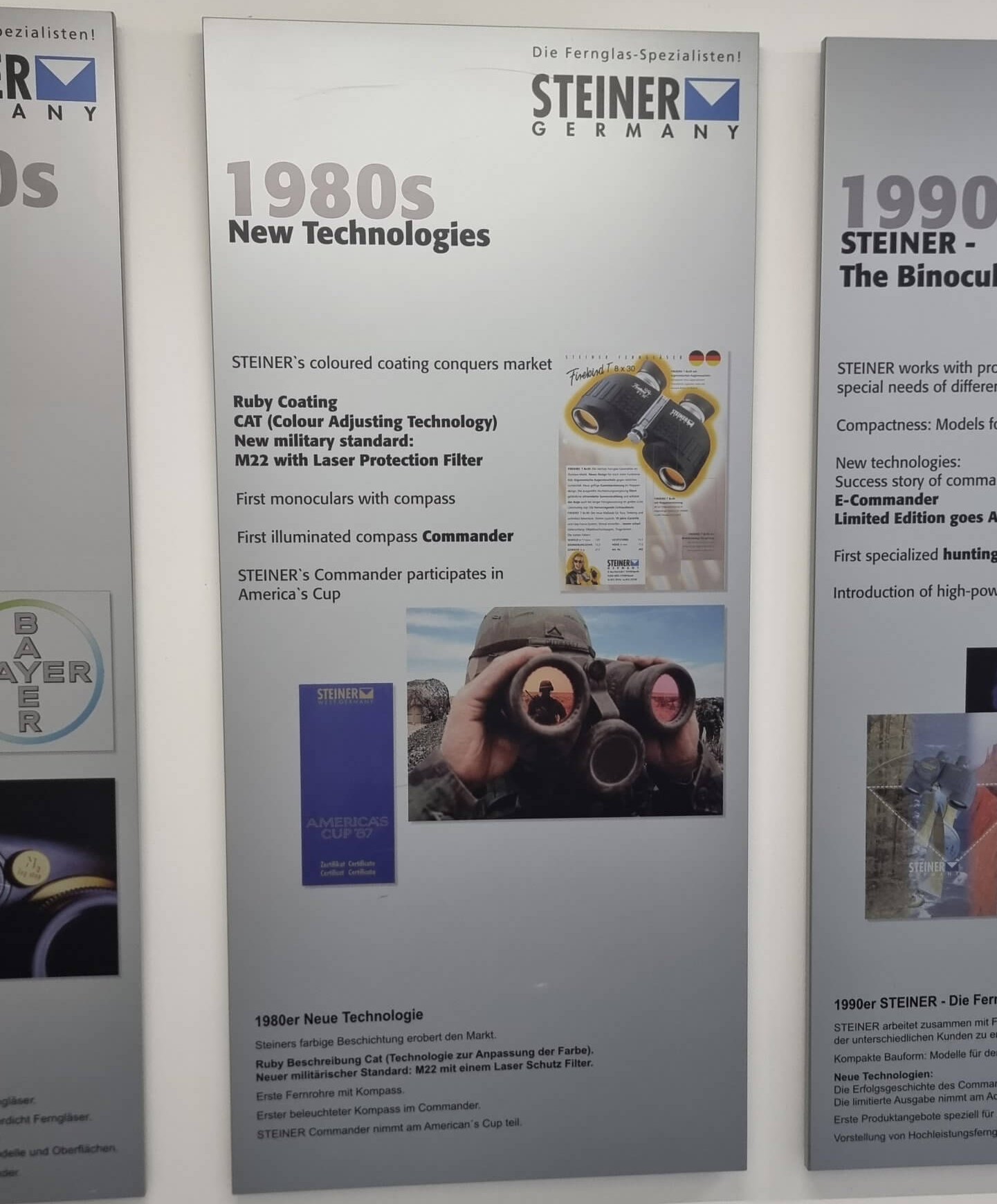
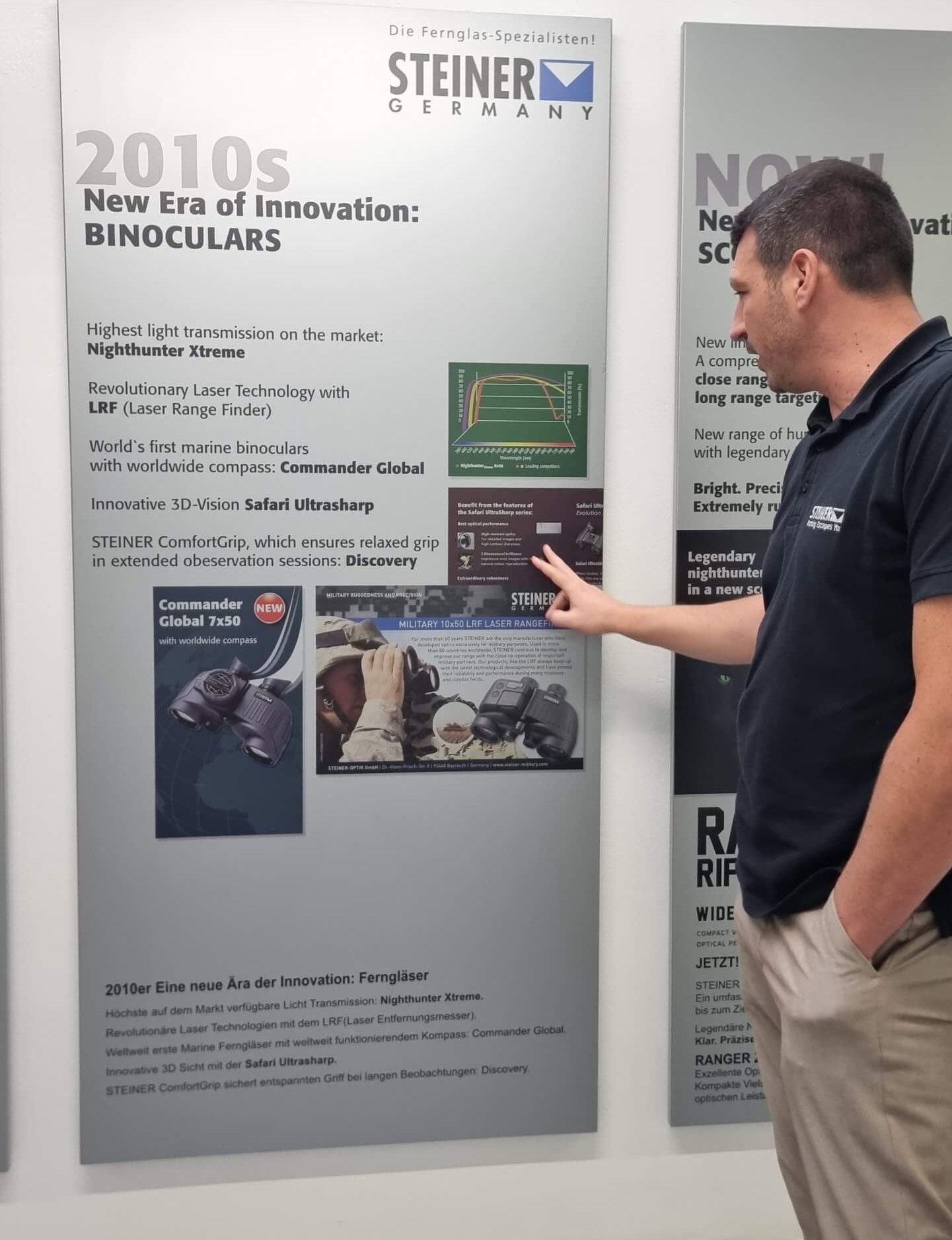
On my visit to Bayreuth facility in Southern Germany, I was greeted my Timo and Andreas their product specialist who gave me an awesome and detailed 4 hour tour of this optics company whose expertise and manufacturing excellence since their inception, gave them a leading edge.
Mr Steiner was also a former Zeiss employee and brought his knowledge to a new dimension. As a person coming from the software and technology industry myself, this product intrigued me even more because it combines the technology as well as the optical know how and precision that German optics are known for especially from a top tier name in the German industry and a main supplier to the military.
STEINER started originally making cameras, then binoculars which quickly proved to be popular with the military for their lenses and filters technology and eventually and with the acquisition of STEINER by Beretta holdings, made steiner a key component to produce high end rifle scopes for the military network brought about by Beretta.
This gave Steiner the sales channel and at the same time gave Beretta an optic company that could strategically give them an edge in product development, optics expertise and provide a new suite of products to existing and new customers. Win-Win.
As I have learnt with Steiner, most of their products are built with the end customer spec already in place, meaning the requirements are put forward by the client to fulfill that order. This includes features and quality requirements and that feeds into the test spec sheet.
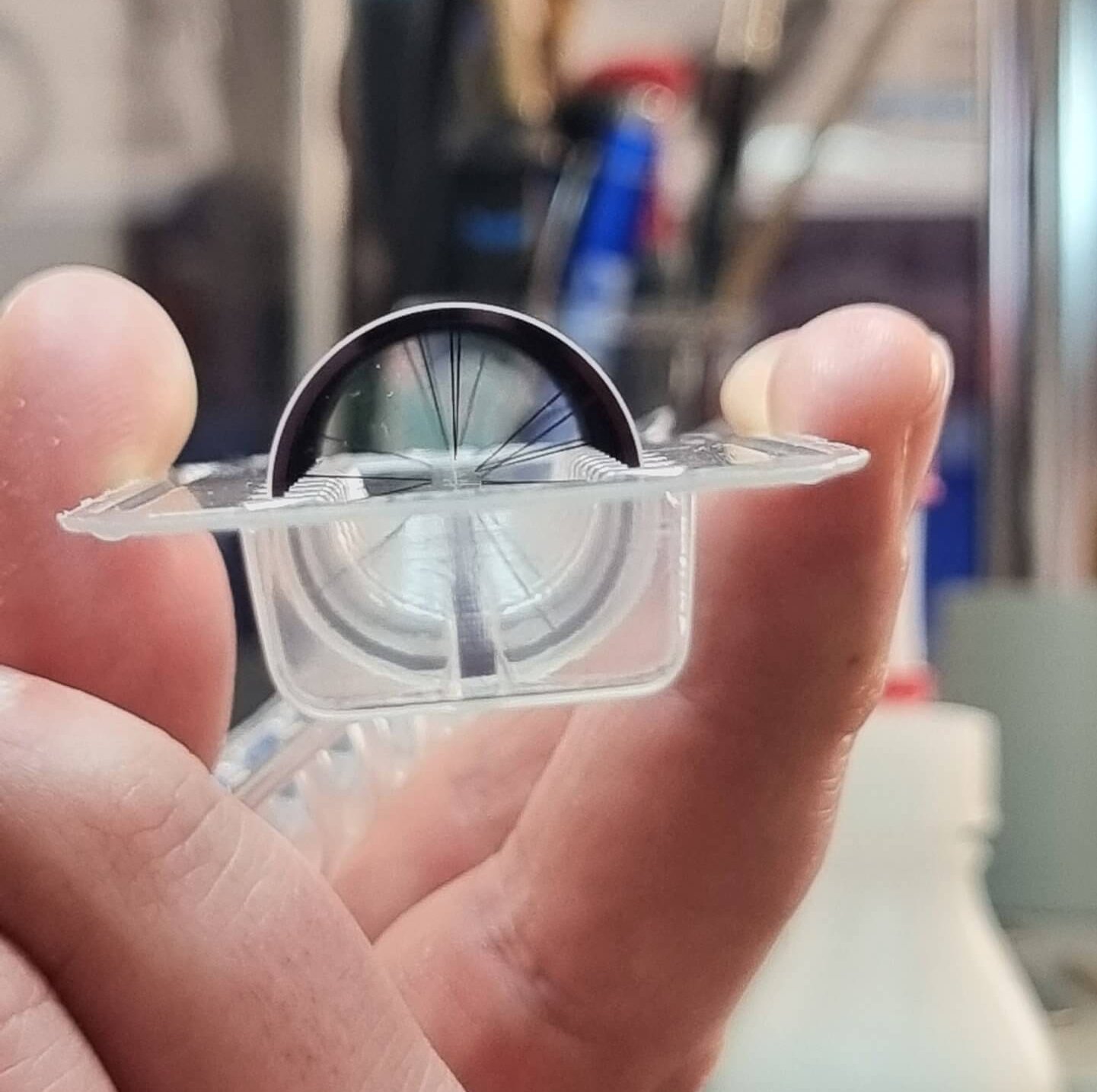
Andreas showed me around the facility that is now being expanded due to an expansion of the company to cater for upcoming needs. We navigated around the laboratory- like floor plan as they showed various part of the assembly process. Most of the components are made by other suppliers and then Steiner assembles them for example the reticle that come ready packed like a box of mints. A room of ladies worked diligently their day away at cleaning lenses and assembling components meticulously.
Below a stack of Steiner reticles are coming on to the assembly and verification line like a box of mints.
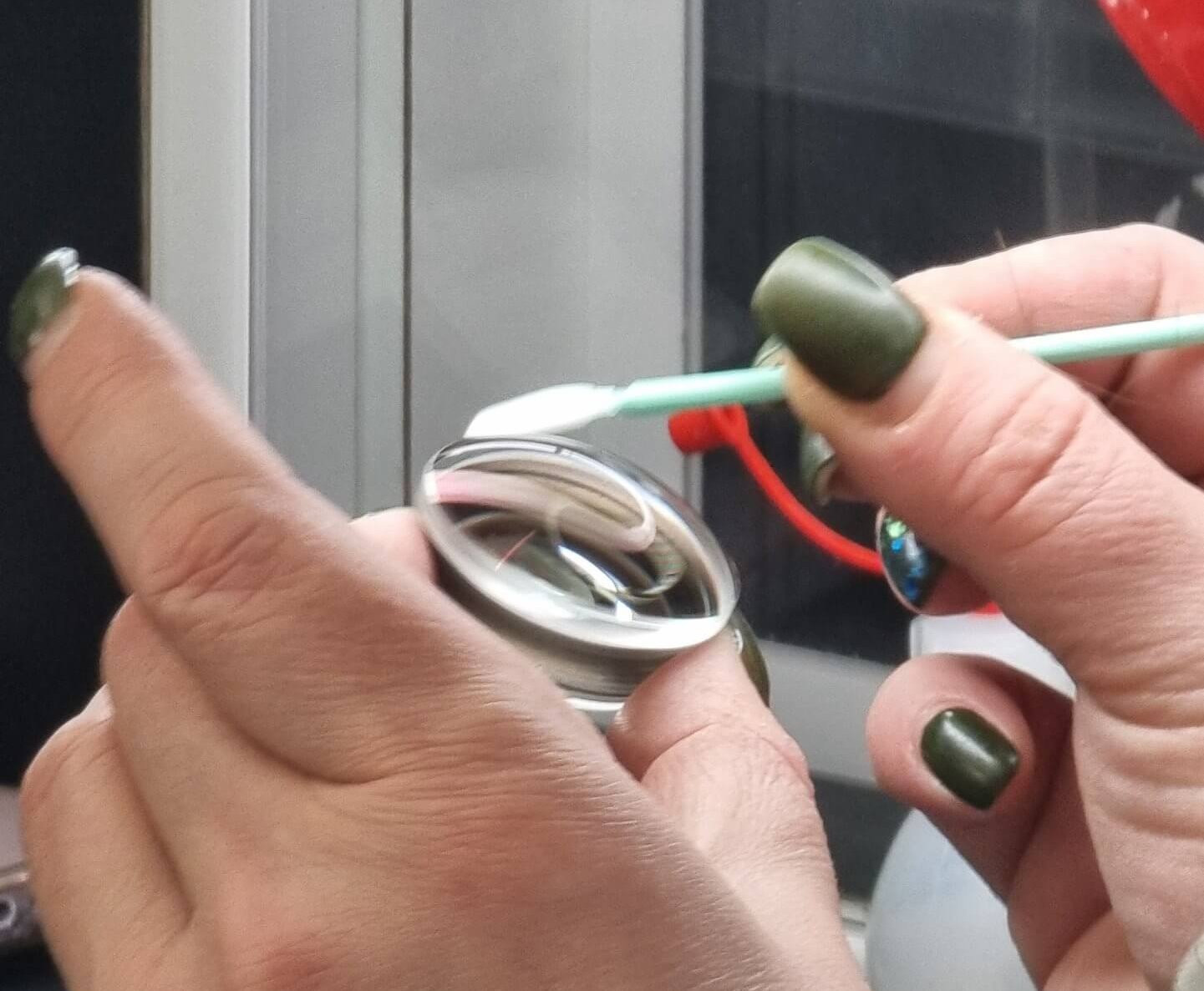
Steiner optic lenses being checked in the factory
I mounted the scope in the trusted ERATAC adjustable mount with Quick Release, This is a mount which I trust blindly, to remove and mount again with Zero shift in Point of Impact. I like that alot and Moritz and Katharina are really helpful when I reach out to them.
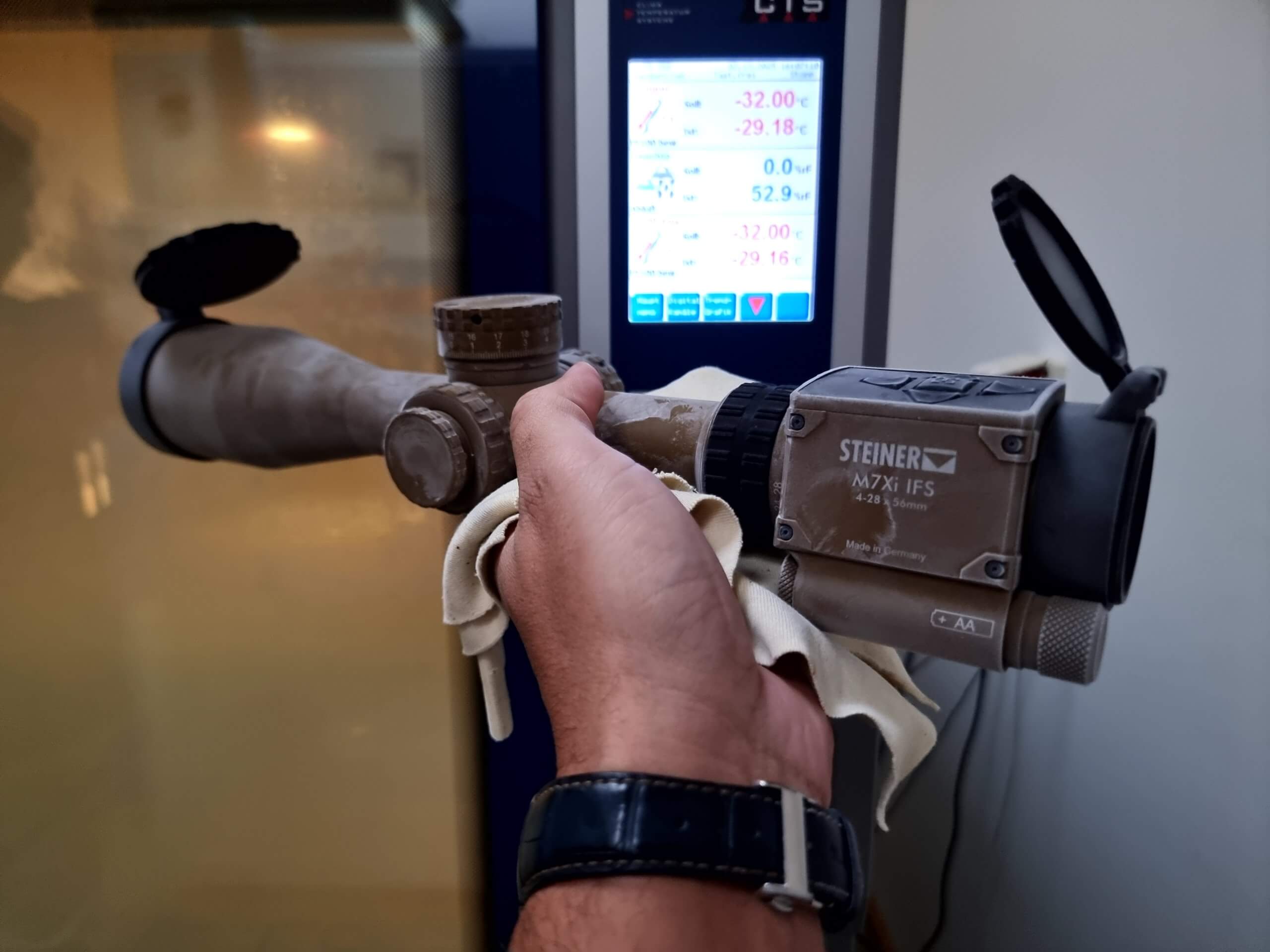
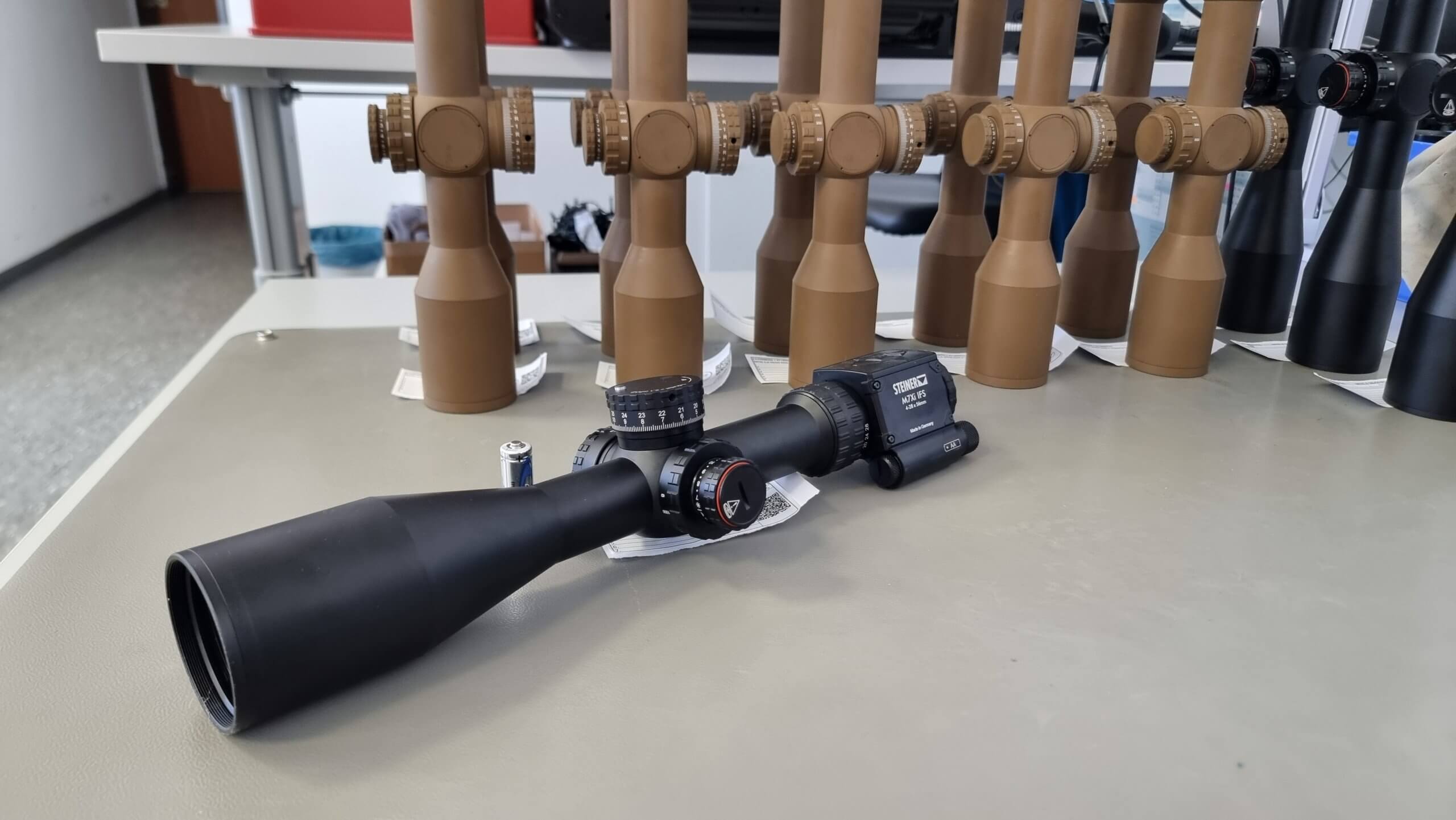
Below, I held a STEINER OPTICS M7Xi IFS 4-28×56 that had just come out of the deep freezeas part of each batch testing of these scopes after enduring – 32 degrees celcius / -25.6 Fahrenheit! I turned on the IFS and through the frozen lenses, I could see the IFS system come to light. Impressive.
In this article and ongoing range and match review, I will delve into how the STEINER OPTICS M7Xi IFS 4-28×56 can improve our performance in long range competition and ELR. The effort put into this optic device merits a genuine expert deepdive. I understand it was developed for a specific military customer and in using it, I understood how similar some needs are and overlap.
STEINER M7Xi IFS 4-28×56 IFS SCOPE BENEFITS
I’m also going to show you how you can:
■ Dial this scope to 2 miles using the steiner software features it has in conjunction with a prism device
■■ How it will save you precious competition points
■■■ How you will never make the wrong turret adjustments again.
■■■■ How you will always have the data you need infront of your eyes for elevation, wind, weather, angles, time of flight abd whatever you wish to toggle in that Steiner HUD.
Thanks to the Steiner team, Christoph, Timo and Andreas who also welcomed me to their facility in Bayreuth, Germany to show me how these high end scopes are made and tested to extremes and also letting me bang a few of them in the testing facility guilliotine type test!
The cooperation and overlap between sport shooting requirements and military needs often overlap. Luckily for us, this Steiner M7Xi IFS 4-28×56 scope was developed with request to a military contract at no expense spared.
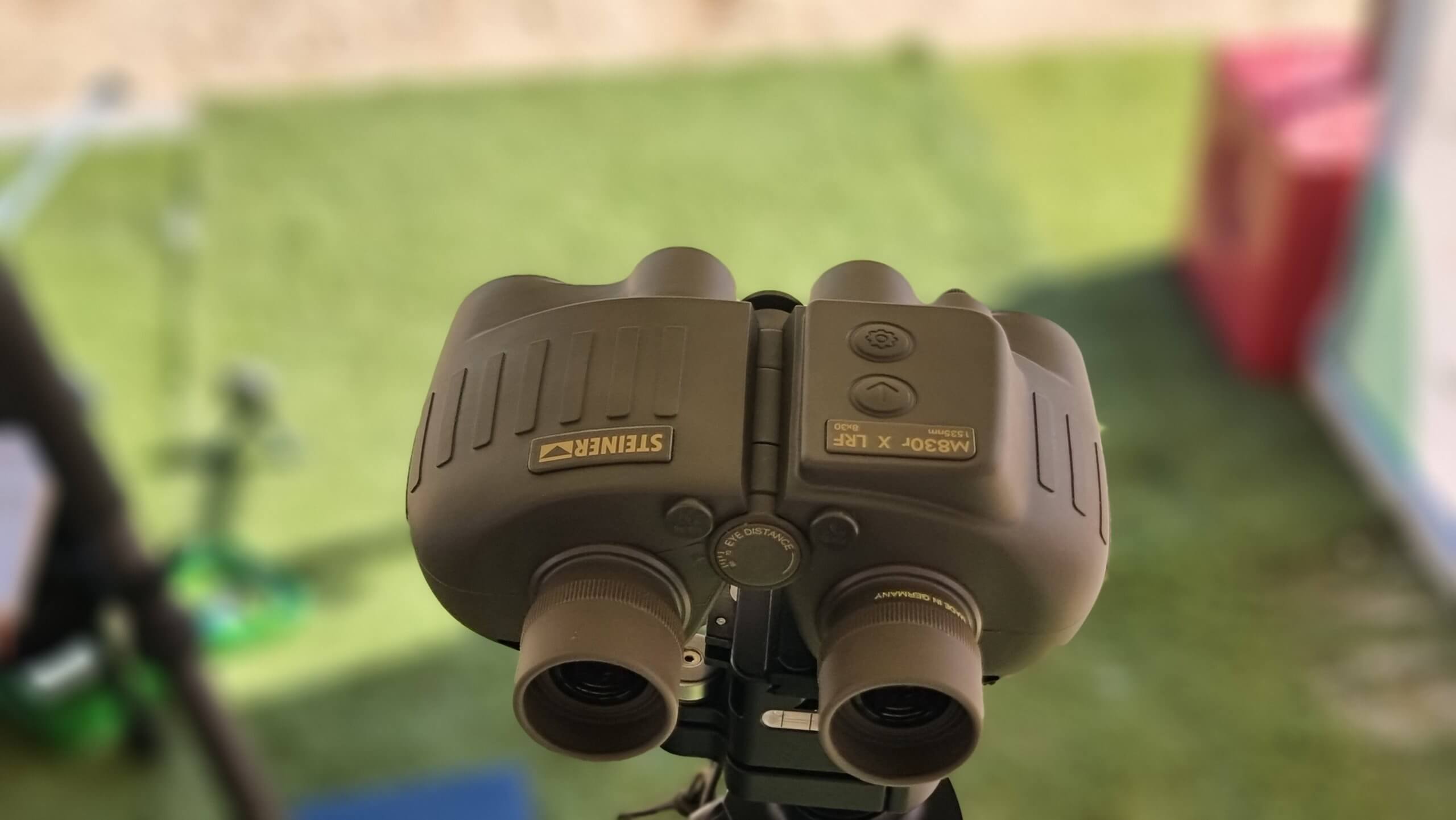
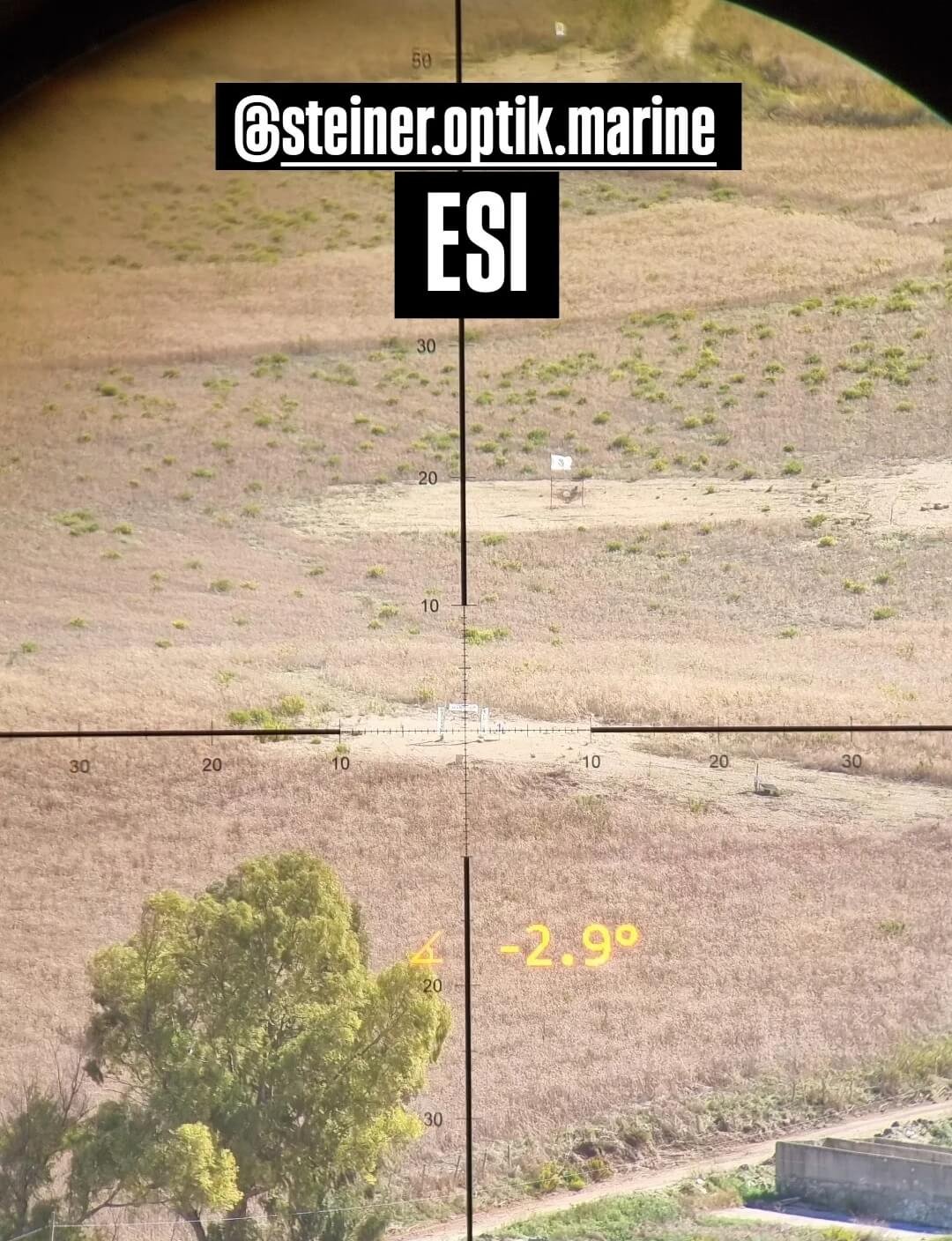
In fact discussing it with other people in the know, the R&D costs were probably only possible as the market hunted the product rather than the other way round. Steiner is known to build products on customer demand, often the military and infact on my visit, I did bump into a military customer at their grounds for their m830 lrf range finders which we also got for ESI to get the best measurements. These milspec rangefinders read out to 12km, connect to the IFS directly and provide azimuth, temperature and angle/pitch. The fine reticle and fast return time make ranging objects like doors, steel signs and rocks at 5km – easy even with the bright Sicilian sun in my face while on a tripod.
Back to the Steiner IFS 4-28×56
For quite some time I wanted to get my hands on the STEINER OPTICS M7Xi IFS 4-28×56, there wasnt much info about it in the print and when Steiner came forward with Merkel/Haenel rifles to support Extreme Shot Italia V (the original ran by the Malta team) the connection was set and the discussions flowed about products and ELR needs.
Speaking to Bernd from Steiner’s military customer support was really useful. They travelled to Sicily with alot of kit and Haenel rifles to try ELR distance. Me and Karine did our best to support them with everything they needed in their preparation.
I spent quite sometime reading and observing how users make use of their scope equipment genuinely by following online threads and then watching tens of hours of competition footage from ESI.
We filmed a total of 160 hours of footage across 4 lanes of ELR international competition shooting action of the best shooters in the world.
If there’s anything to learn, its all there! These discussions have taken me in and out of various competition shooting mindsets, but ultimately nothing beats watching how someone uses a product under stressful moments and competition does just that, challenges your fundamentals and time can trigger panic.
WHAT ELR SHOOTERS MESS UP
At ESI I noticed even the best shooters make wrong turret adjustments under stress. I had this lengthy discussion with Gary Costello, a world class Fclass champion how this happens to the best of us under stress and game change or range changes.
■ Dialing the other way,
■ Being a full turn out,
■ Starting on the wrong zero and then
■ Fiddling with kestrel on the firing line can kill your concentration, some manage some don’t.
What if you had everything you wanted to see (selectively) on a heads up display ABOVE YOUR RETICLE? That’s what the STEINER IFS promises to be.
TURRETS – STEINER M7Xi IFS 4-28×56
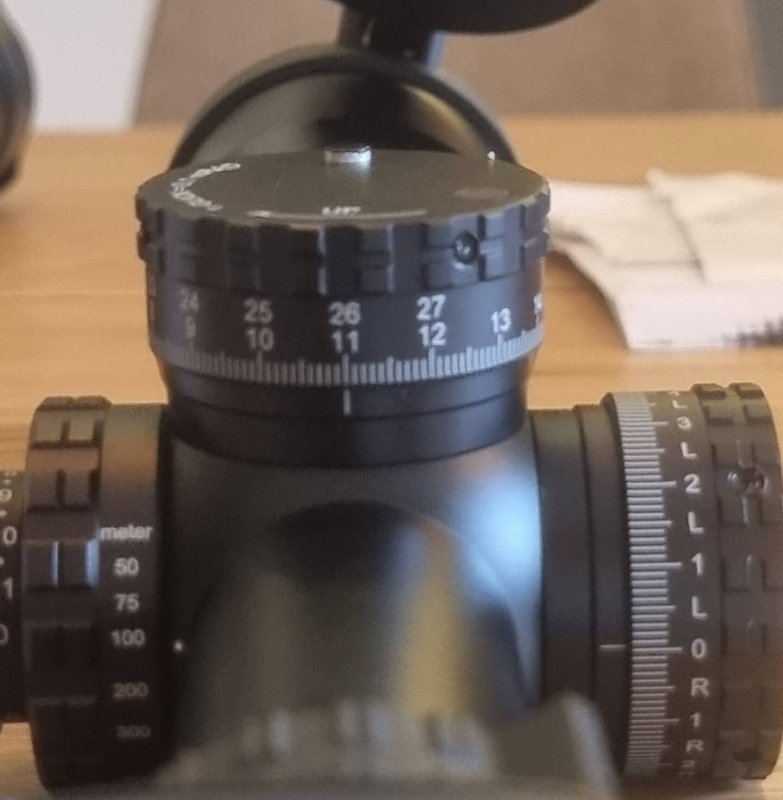
The steiner IFS has large tactical, audible, solid turrets, relatively low profile with easy to read numbers, in mils (No MOA).
Its got 28mils of travel over 2 revolutions with a popping nipple as soon as you are on 2nd revolution. This model came with CW turrets but you can also order them CCW dialing for direction. Timo sent me this combo which I was excited to put my hands on.
STEINER IFS Turrets MIL CW – Notice the nipple protruding on the turret above showing you’re on the 2nd revolution
Initially I had big reservations about CCW as i know my muscle memory is probably done. However after about a week spinning these turrets, it’s not a big deal and i’ll explain why even though for the last 20 yrs I always shot CCW.
The steiner HUD shows me which way I am diailing so If i need 5clicks Right its reads R5 as I dial. If my spotter says reduce 0.5mrad, i can see the adjustment being reduced as I dial to 0.
STEINER IFS Heads up Display Simplified
How does the STEINER IFS HUD make your shooting easier?
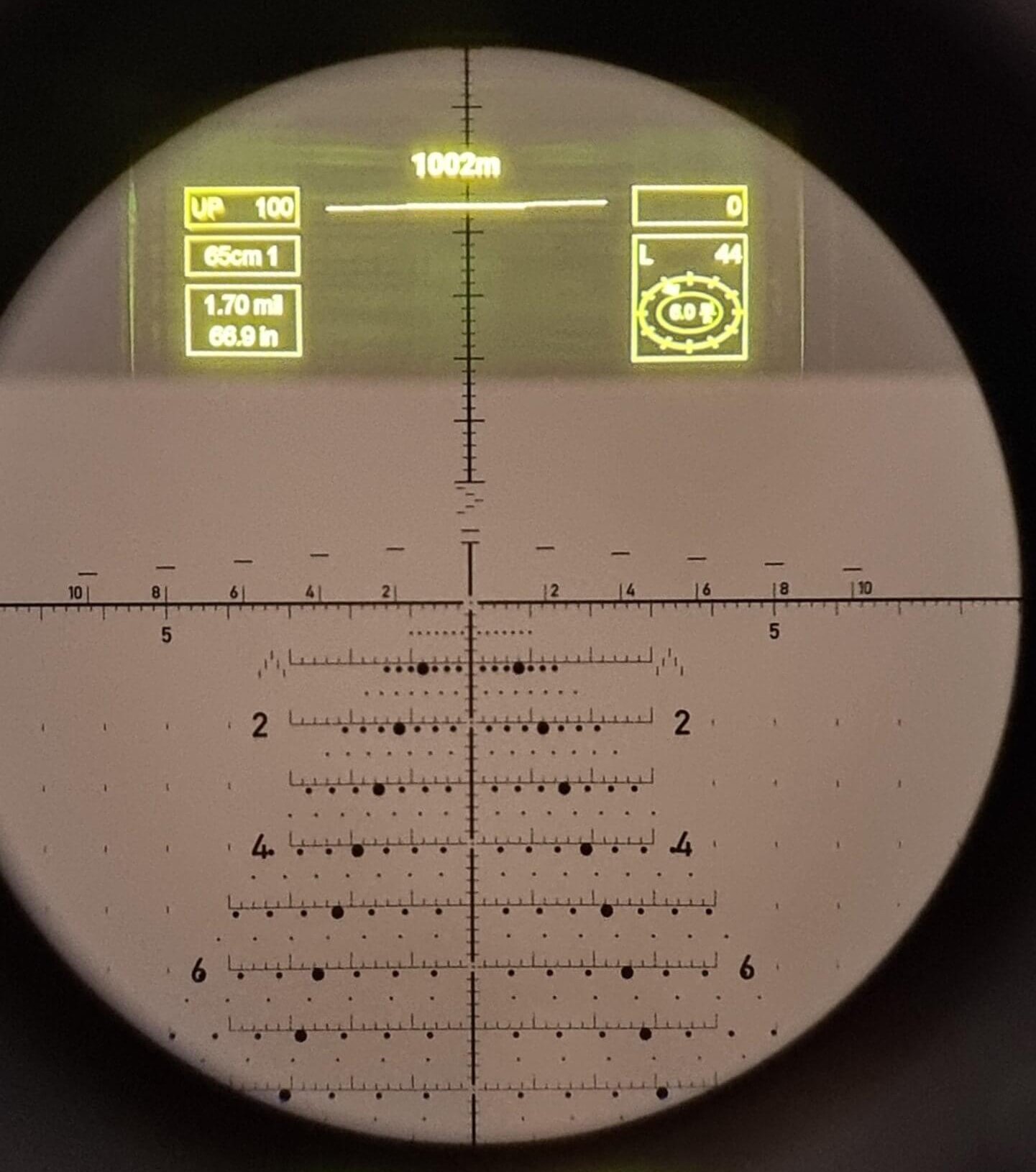
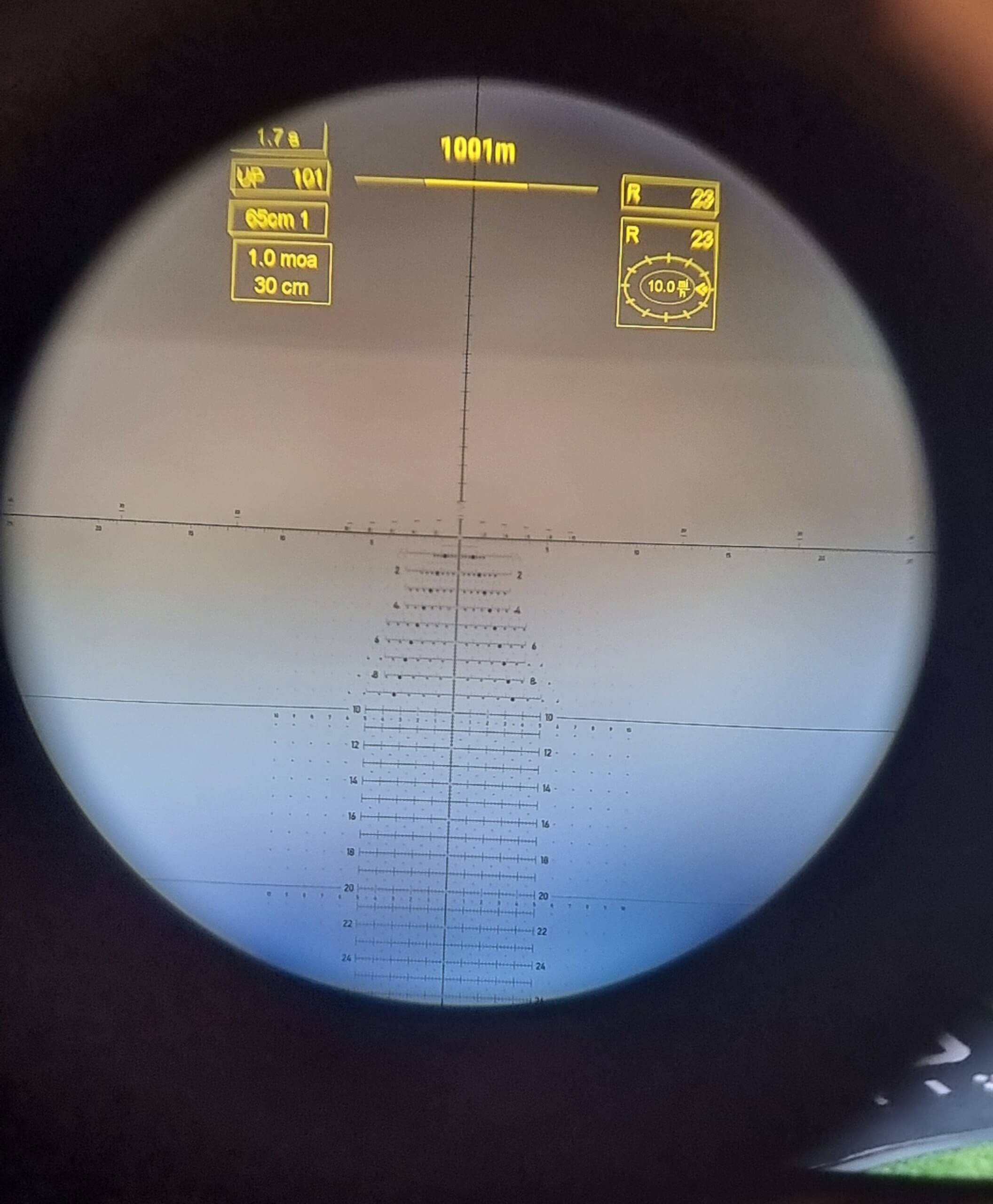
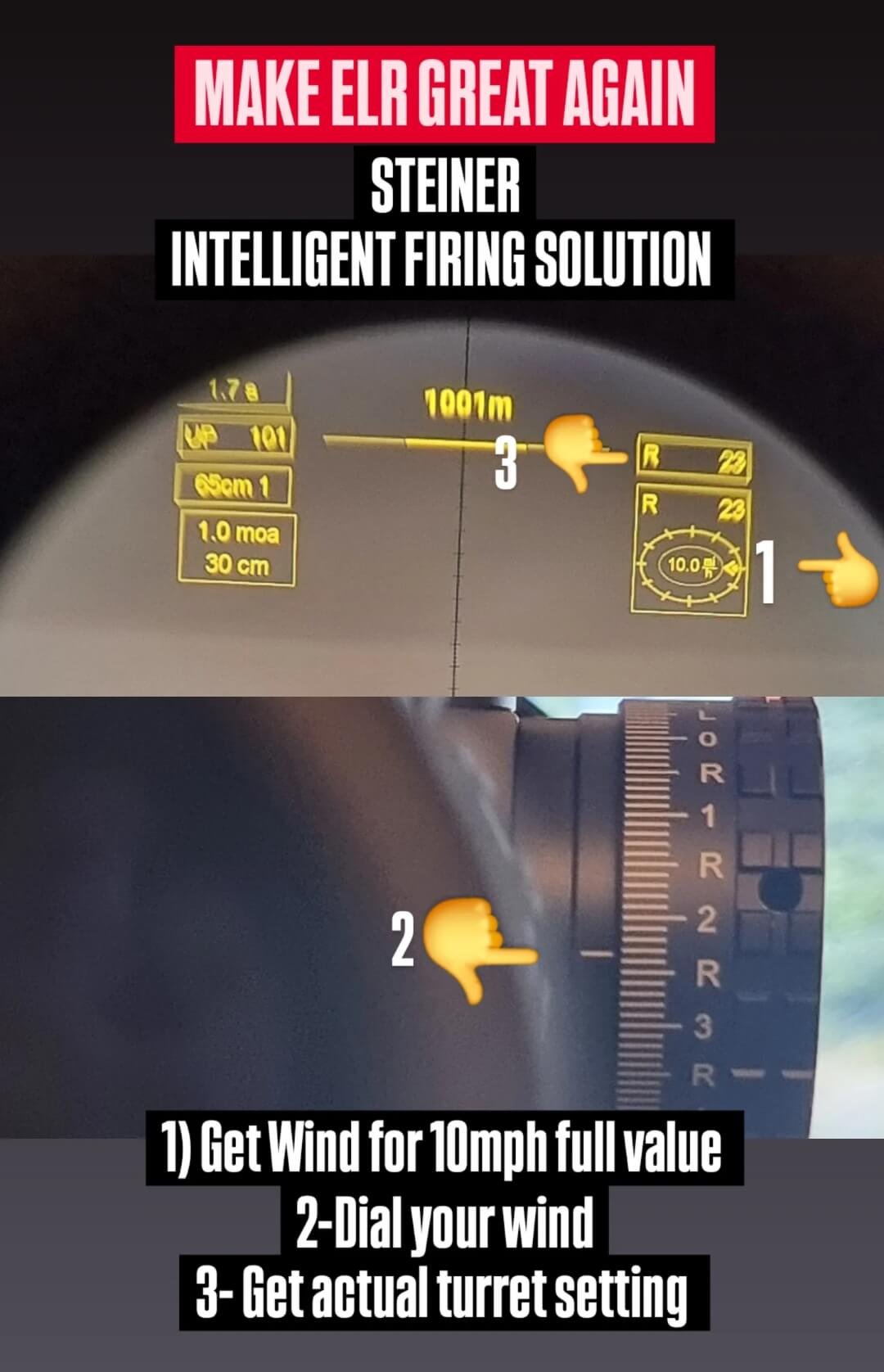
Below you can see some data which I hoped to capture with my phone.
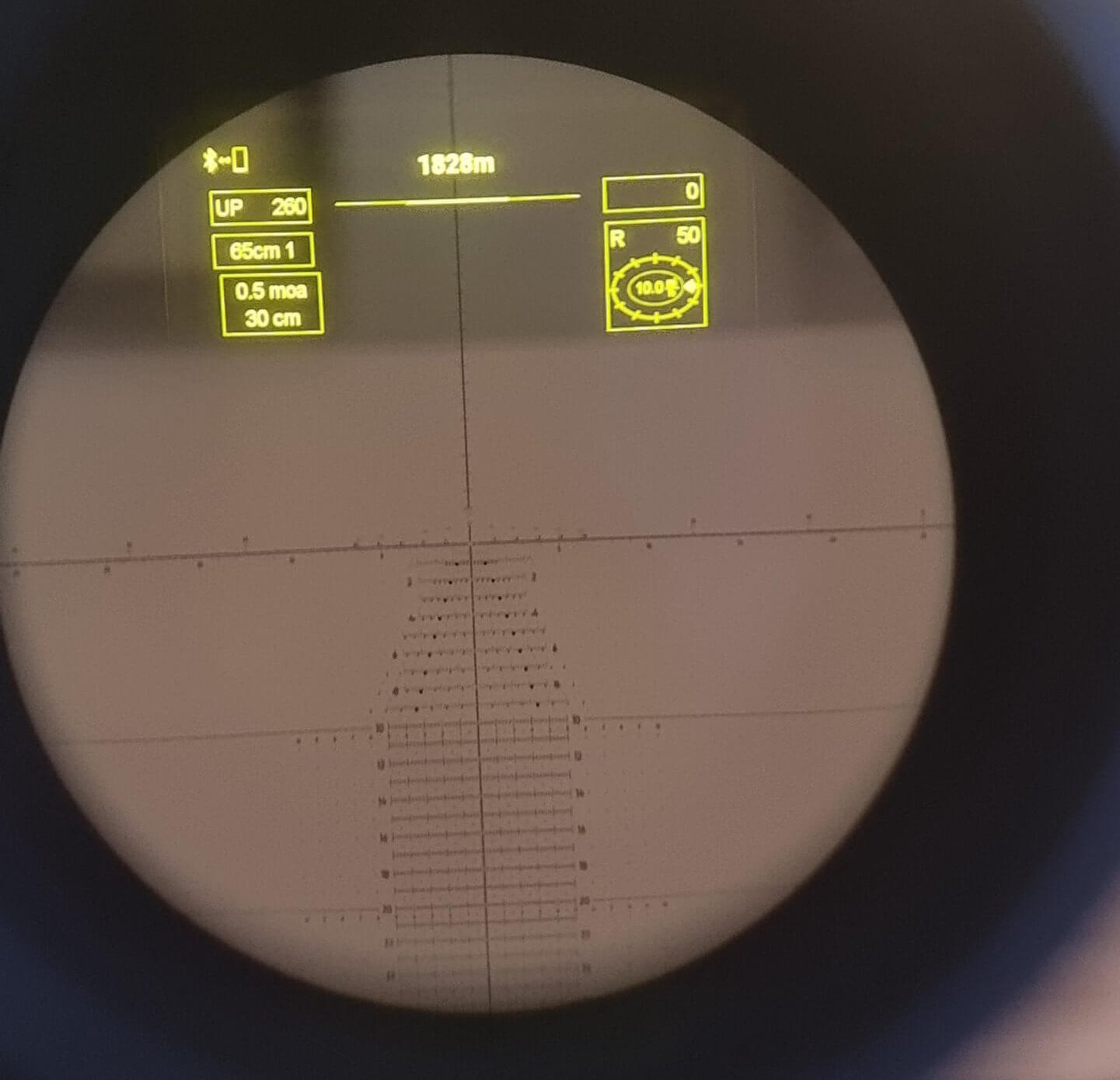
The center of the HuD shows the range to target at the setting which the turret is on. As you turn your turrets, this figure will change.
On the left hand side, you can see the time of flight 1.7s.
Below that ‘UP’ 101 shows the number of clicks on the turret 10.1 mils
65cm1 is the cartridge name i gave this setup in the app for my 6.5creedmoor
Beneath that I had setup a target size which I wanted to see for that distance 1MOA is 30cm at this distance. This is setup on the app but shows on the HuD.
Right hand side – TOP part.
R 23 shows I had my windage turret dialed on 23 clicks Right.
Beneath that, the wind clock shows me a windage correction for 10mph wind from 3 oclock. 2.3mils.
You can quickly change the wind input by using the buttons above the scope to change speed or direction. Takes 5 seconds.
If you connect the scope to the STEINER M830 LRF, you can get a range reading beneath the turret setting.
Please note that taking pictures through the scope is always a challenge and the angle is due to me trying to get a better shot sometimes not so successfully. 🙂
Since this scope is CW turrets, I’m dialing with my left hand as with this hand I have no muscle memory on turrets.
This means i dont have to look at my turrets, i just read the Heads up Display above the reticle itself. With the STEINER M830 laser range finder, you range the target. Eg. 1000m. This distance to target will show on your HUD if you are connected to the lrf. Then you turn your elevation turret to read 1000m on the HUD – done.
As you turn the turret, you will see the range changing on your HUD. [You dont need the steiner lrf unless you want to see the lrf range readout on your scope.]
You can fully customise what you want to see and where on the HUD screen much like the apps on your phone. The steiner app connects to the scope in a second.
You have an app from which you can select which widgets you want to see in the HUD that sits in the top 1/3 of the screen. There are 10 brightness settings in yellow. * I would prefer the option to be able to swtich to black or green for really bright sunny days which we get in the mediterranean.
What if the battery dies?
The Steiner IFS scope is still mechanical for adjustment so nothing changes just like any other scope.
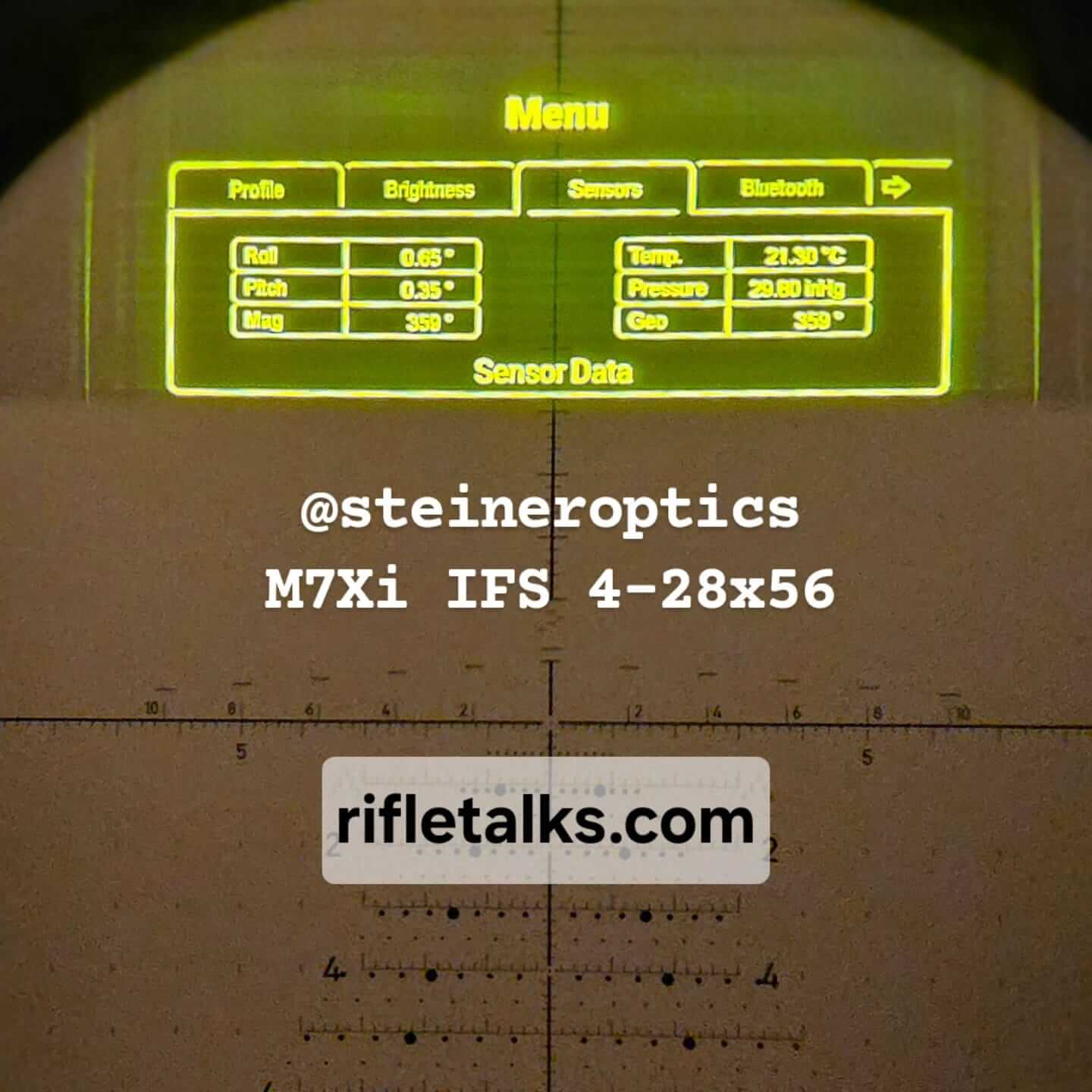
The IFS comes with an onboard ballistics solver, inclinometer for angle, temperature, pressure, azimuth, latitude and longitude inputs as well as numerous ballistic profiles onboard for popular NATO catridges.
I ran the numbers on my kestrel and strelok as well to compare the data output and I was within 0.1-.2mrad out to 3200m.
steiner IFS heads up display showing the sensor data infront of your eyes.
STEINER HEADS UP DISPLAY (HUD) setup
I set mine up to give me the following data:
Left side of HUD
■Time of flight in Seconds on top left.
■Caliber (you can switch from scope buttons or app)
■Target size at that distance.
I set mine to give me 0.3mrad (1MOA) and its equivalent in cm at the distance im dialed. You can change this as you please. If your targets are typically 2MOA you can insert that.
Center part of HUD
■ Elevation Turret range setting
■ Digital bubble level, you also have a pitch indicator that reads to 0.1° if you want.
■ Range finder read out compatible only with Steiner’s mil spec lrfs.
Right hand side of HUD
■ Windage knob setting
■ wind clock ° and velocity
■ windage suggestion
STEINER HUD: Wind clock overview
Notice Below, I setup the HUD to also show me the direction of fire to the target 359 degrees showing above my windage turret setting on the right hand side. Love it.
When i first got the steiner IFS, I was sceptic about using the digital windclock in the field.
However upon spending time getting familiar with the scope, it’s relatively straight forward, the numbers count up/down fast and the buttons are responsive.
* I would have made the rubber with some tactical feeling like braille to make it easier for the operator.
The steiner IFS scope has 4 buttons: up, down, left right. I set mine so that left and right buttons change my wind direction – as you click you will see the cursor rotate around the clock to indicate wind direction.
The up and down buttons change wind speed. Again these can be changed from the app if you fancy a different button setup. Metric/ imperial or a mix is possible.
You can either set the wind clock to read 10mph /m/s wind from 9 oclock and then do the math yourself, or you can set it for your average condition. It takes about 3-6 seconds to setup when i timed myself. For those heading on mountain hunts for Dall sheep, Ibex or similar challenge, this can be a game changer.
What I really like is the possibility to quickly change wind direction and get a windage readout for that distance. This gives you quick access if you want to know what happens if your wind direction changes.
I would love to see the same wind clock system in the spotter too but adjusted from an app to avoid touching the spotting scope and shaking your view of the target.
I uploaded 4 ballistic profiles: ■6.5creedmoor with 140smk,
■33xc with 300gr OTM bergers
■416Barrett with 550gr Cutting Edge.
■416Barrett with a 29mil offset (Nightforce Wedge mounted) *I Will explain how to use it.
I spun the turret around and compared a few readings to my kestrel and strelok. The data was matching so thats a good start. The IFS uses their own ballistics program not AB, but so far i didnt see any difference. When I did get 0.2mrad, i adjusted the BC in the IFS to true to my kestrel and than the numbers matched.
With just under 28 Mils on the IFS, i know that with my 416Barrett and 550gr CE bullet, i’m out to 2200-2300m from a 100m zero. I’m also using an ERATAC Adjustable mount 0-20Mils.
STEINER 4-28X56 IFS SETUP FOR ELR
Now you have two options to shoot past 2300m
I) you can either use an offset method and setup your rifle to be zeroed say 11″ high at 100m like a 600m zero, that will take you to about 2400m but not much further, i’m not a fan of huge offsets.
OR If you want to shoot 2miles, use this method in conjunction with Optex / Nightforce Wedge / TacomHQ Prism / Ivey adjustable mount.
II) Setup two ballistic profiles for the rifle
In my example I called them 416B and 416Bv2
The first profile is zeroed at 100m and I can dial to about 2240m (27.7mils to be precise is what I have left)
The second profile has been programmed with a 29mil offset which is achieved when I mount the nightforce wedge.
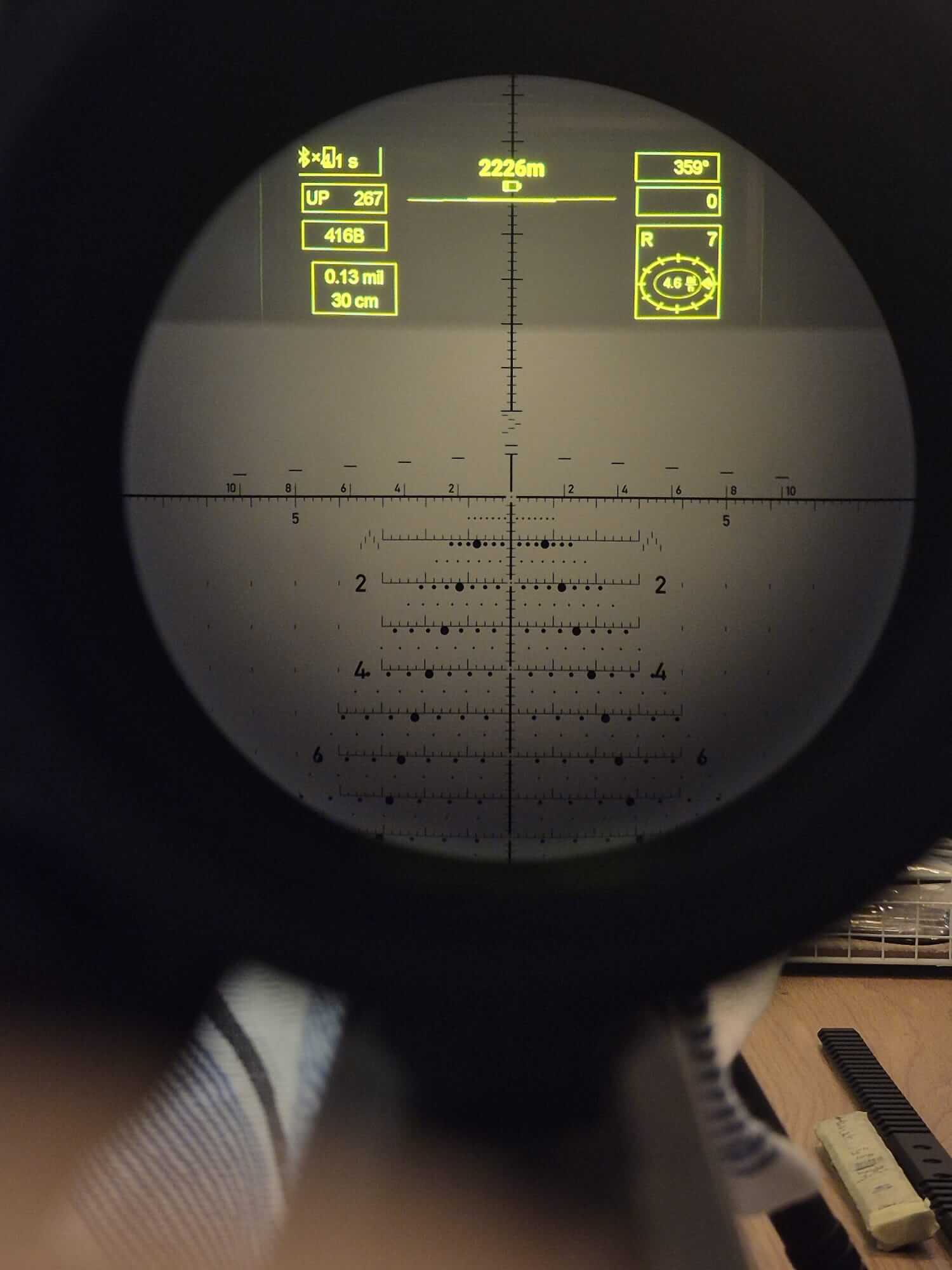
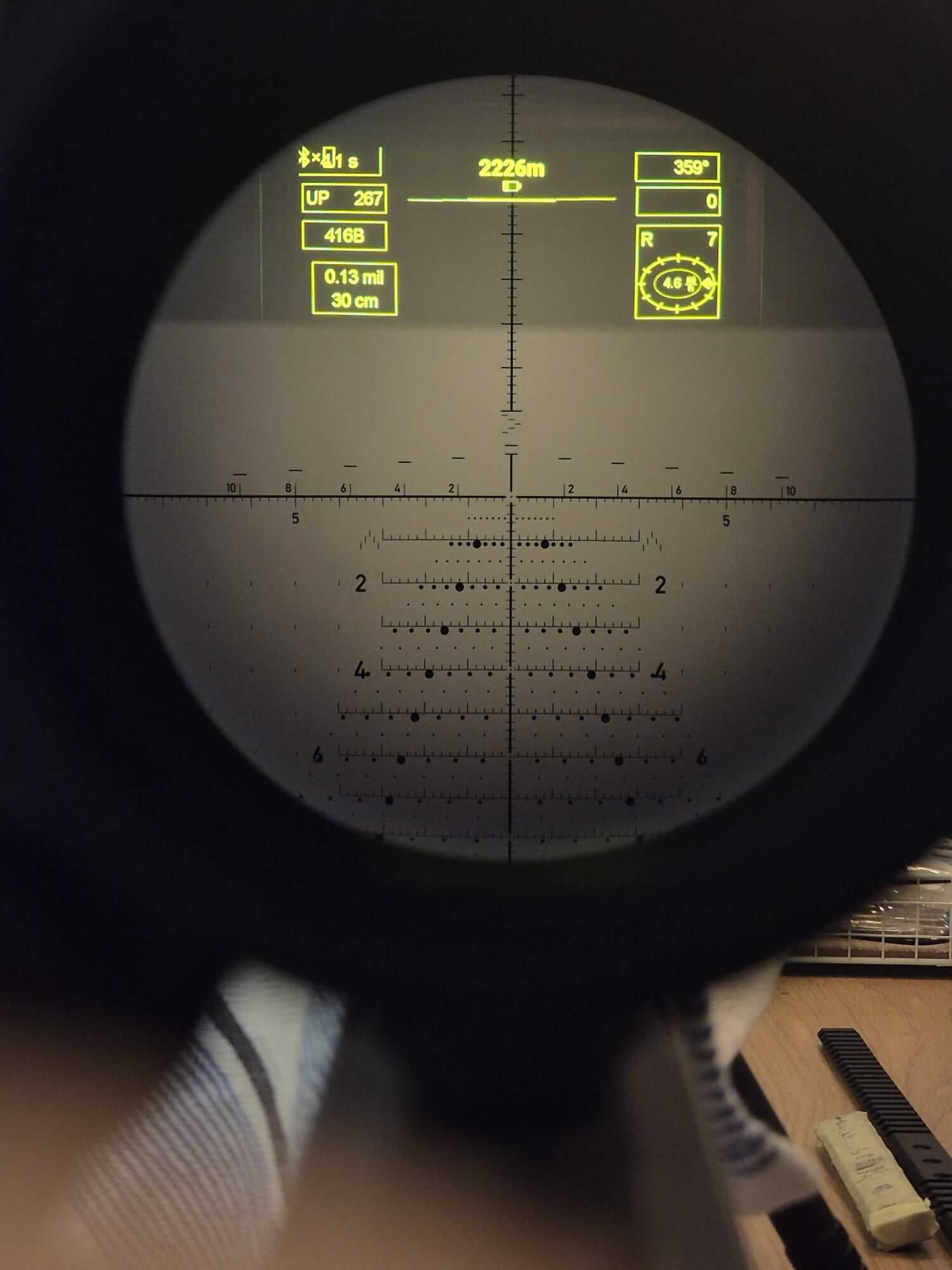
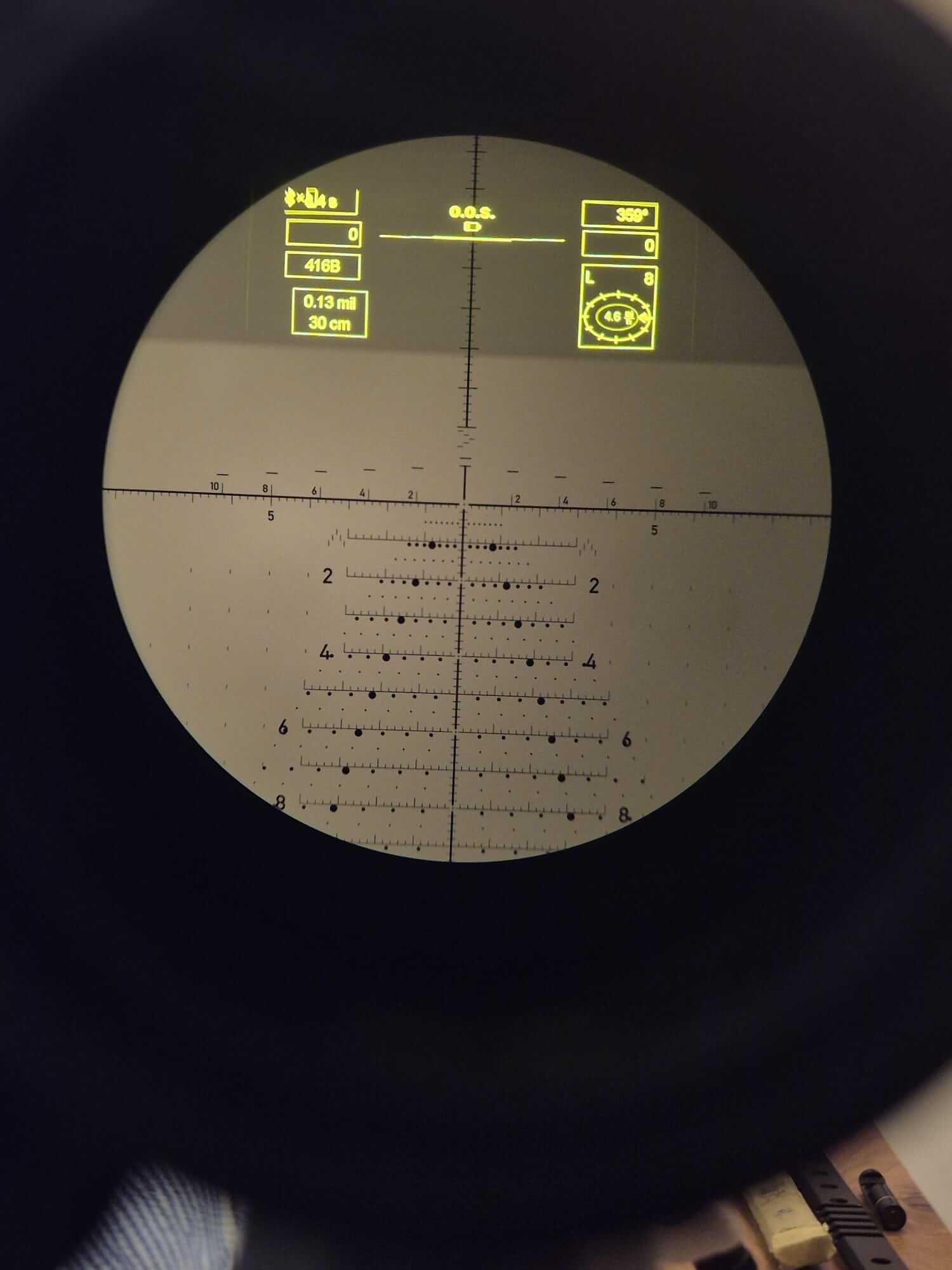
By doing so, I’m telling the IFS > Hey i have now mounted a 29mil offset and please take it into account in your calculations so the turret will now start counting from 29Mils or 2340m on my turret reading.
In practice, all I need to do is this, let’s say I need to engage a target at 2430m.
I know this is further than I can dial on 2 revolutions which is 2240m.
I) i bring back my elevation turret to zero.
Ii) I mount the Nightforce Wedge prism (29mils)
Iii) From the IFS scope, I select the second 416BV2 profile.
Now I just turn the turret till it reads 2430m. (it started counting from 2340m)
Doing this you have now tricked the software to think you have just under 56mils of elevation! Depending on environmentals, you will be able to shoot past 2 miles without needing a holdover while still having all data in your HUD. Remember the IFS is also taking note of your environmentals in real time.
Why this helps?
You don’t need to count 29mils on your wedge plus whatever you have on your scope turret > instead you just Dial till you get the correct range readout.
On my visit to the STEINER facility, Andreas walked me through the various stages of the scope manufacturing and assembling process. I will share some of these pictures here to appreciate what these scopes go through before being delivered to the end customer and what bumps up the pricetag.
The most interesting bit for me was watching how the scopes are tested to adhere to the military spec they need to confirm to especially the electronics bit.
STEINER M7Xi IFS 4-28×56 RANGE DAY
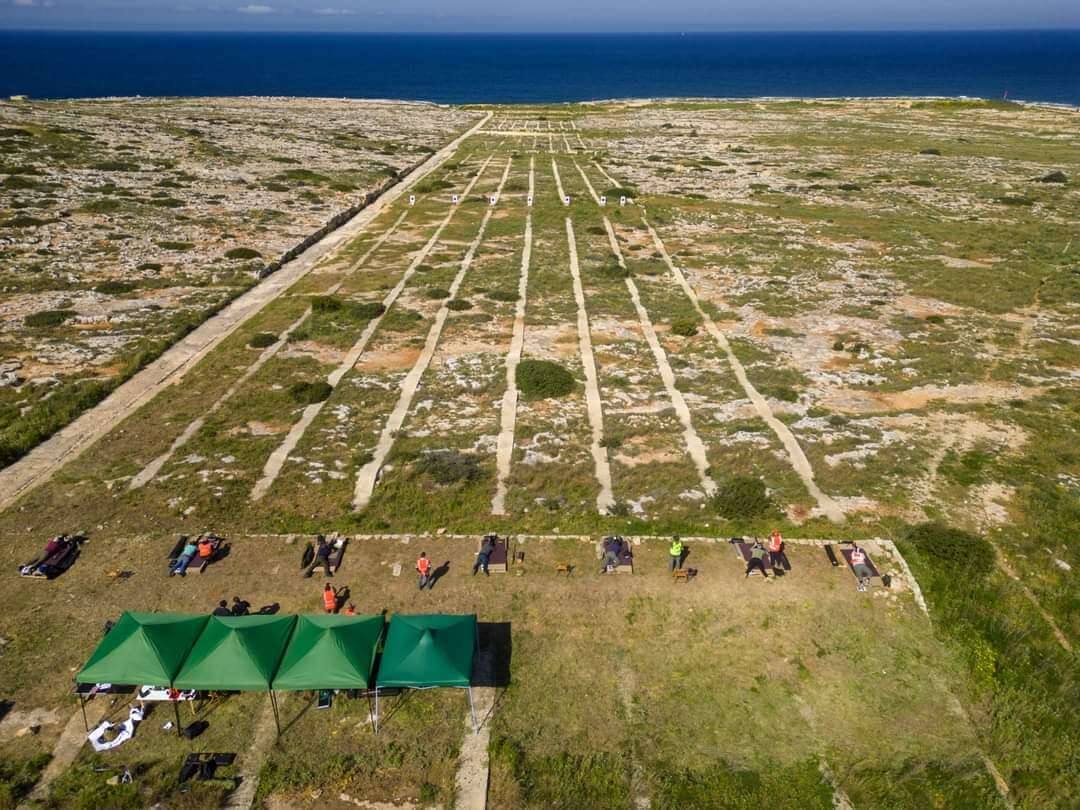
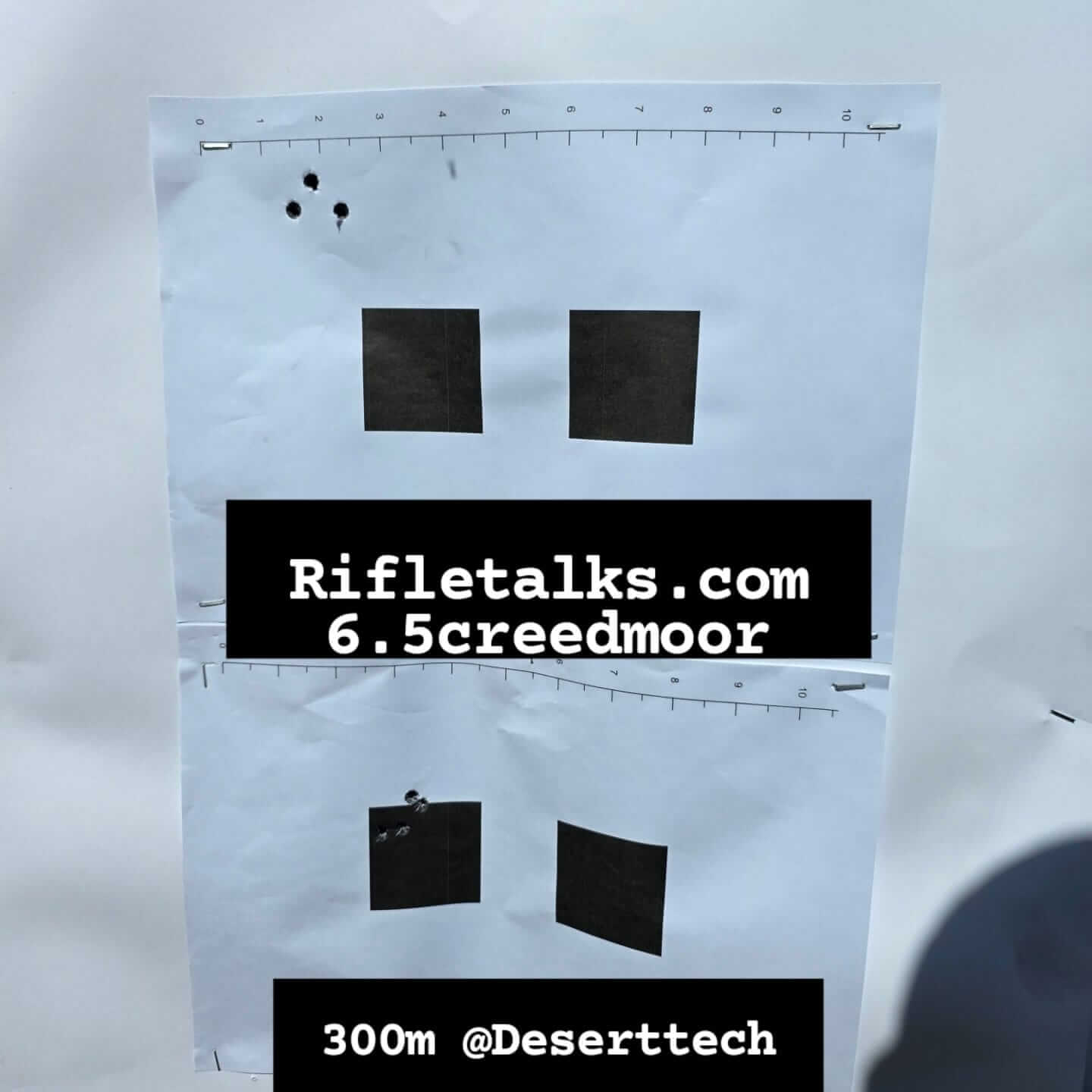
In view of the upcoming shoot at the historic Malta Pembroke ranges, they go back over 120 years to when Malta was a British naval base, I took the scope out with me to test my 6.5creedmoor loads, i know my Desert Tech SRS A2 holds its ground very well with the solidsolutiondesigns bartlein barrel, the rifle after load development holds less than 1″ at 300m and event better. In my last outing, it is holding around 0.8″ at 300m so that’s a reliable load to test this scope with. I shot it at 200m and 300m and it printed these groups, the top group at 300m and the one beneath it at 200m with 140smk at 2866fts in 17degrees celcius, I was aiming at the top left corner of each square for a finer hold.
6.5creedmoor load testing 300m
With 0.1mrad clicks, at 300m, I wasnt zeroed perfectly at 300m I was either at 296m or at 306m when i clicked due to the 0.1mrad being coarser than 0.25MOA i am use to. However this is perfectly acceptable, I inputed the BC of my 140SMK and with a zero on my Heads up Display at 306m i printed a 0.7″ group at 300m. I will head out again to try it at 400/500/600m and then later in the year it will accompany me to a fantastic trip that will remain a surprise for now.
More info coming in the next weeks – stay tuned to rifletalks.com.
Rod
Founder of Rifletalks.com. I setup this website to share some of the knowledge and experiences I have been through over the last years in pursuit of long range rifle shooting accuracy. Feel free to email me.
This website uses cookies to improve your experience. We'll assume you're ok with this, but you can opt-out if you wish. Read MoreCookie settingsACCEPT
Privacy & Cookies Policy
Privacy Overview
This website uses cookies to improve your experience while you navigate through the website. Out of these cookies, the cookies that are categorized as necessary are stored on your browser as they are essential for the working of basic functionalities of the website. We also use third-party cookies that help us analyze and understand how you use this website. These cookies will be stored in your browser only with your consent. You also have the option to opt-out of these cookies. But opting out of some of these cookies may have an effect on your browsing experience.
Necessary cookies are absolutely essential for the website to function properly. This category only includes cookies that ensures basic functionalities and security features of the website. These cookies do not store any personal information.
Any cookies that may not be particularly necessary for the website to function and is used specifically to collect user personal data via analytics, ads, other embedded contents are termed as non-necessary cookies. It is mandatory to procure user consent prior to running these cookies on your website.
STAY UPDATED BY SIGNING UP FOR OUR NEWSLETTERSIGN UP





 (it started counting from 2340m)